
DSSSB 13 August 2024
Obstetrics & Gynaecology
Easy
Identify the instrument shown in the given image.
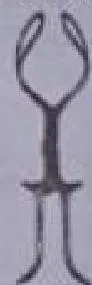
Appeared in: DSSSB 13 August 2024
Explanation
- The instrument shown in the image is Wrigley's outlet forceps.
- Key identifying features visible are its short overall length and short shanks, which are characteristic of this type of forceps.
- Wrigley's forceps are specifically designed for outlet deliveries, which is when the fetal head is on the perineum and visible at the introitus between contractions.
- The fenestrated (open) blades allow for a secure grip on the fetal head with minimal compression.
Why Other Options Were Wrong
- Option B: Kielland forceps are longer and feature a sliding lock and minimal pelvic curve, which are not characteristics of the instrument in the image.
- Option C: Magill forceps are not used in obstetrics. They are angled forceps used in anesthesia to guide endotracheal tubes into the larynx.
- Option D: Elliot forceps are longer and heavier than the instrument shown. They are used for low or mid-forceps deliveries, not outlet deliveries.
Related Visual

Clinical Relevance
- Nursing practice connection: This is primarily an exam-oriented knowledge point with limited direct bedside application, so retain Identification and application of obstetric instruments as background academic context rather than a clinical decision trigger.
- Proper identification and selection of obstetric forceps are critical for maternal and fetal safety. Using the wrong type of forceps can lead to significant trauma.
- Wrigley's forceps are intended for outlet deliveries only, where minimal traction is required. Attempting to use them for a mid-pelvic delivery would be ineffective and dangerous.
- A nurse's role includes ensuring the correct instruments are available for the procedure and being able to anticipate the obstetrician's needs based on the clinical situation (e.g., fetal station and position).
How to Approach the Question
- This is an image-based identification question requiring recall of medical instruments.
- First, carefully examine the instrument in the image. Pay close attention to its overall size, the length of the shanks, the shape of the blades (fenestrated or solid), and the type of lock.
- Note the most prominent feature: the instrument is short.
- Recall the different types of obstetric forceps and their primary characteristics and uses.
- Compare the features observed in the image with the characteristics of the options provided.
- Wrigley's forceps are known for their short length, making them suitable for outlet deliveries. This matches the image.
Concept Tested & Keywords
- Concept Tested: Identification and application of obstetric instruments.
- Stem keywords: instrument, image, forceps
- Lead-in keywords: Identify
Question ID
QeDf_Ko0jBSLPBdN3FU81_
Reference Book
E6 Midwifery Obstetrics and Gynecology Nursing Sandeep Kaur p. 26-34
Practise the full DSSSB 13 August 2024
Attempt every question from this paper in a timed mock, then review the full solution for each one.
More Practical Obstetrics Questions
- Identify the following instrument:
- Identify the blade used:
- Identify the instrument used by a nurse in the following image:
- Match the following
- Identify, which of the following retractor is used in abdominal surgery?
- The instrument used for measuring fetal heart rate (FHR):
- What is the name of this retractor?
- Identify the following instrument?
- Identify the image showing in the picture?& x20;
- Green Armytage forceps is used to arrest bleeding in?
More DSSSB 13 August 2024 Questions
- Which of the following is NOT a component of mental status examination?
- Which therapy is being shown in the given image?
- Which of the following correctly describes esotropia?
- The tablet Arkaminis used in the management of:
- A patient was brought to the emergency department and a blood sample was sent for serum electrolyte level. The report shows that the serum potassium…
- The concept of therapeutic community was first developed by:
- The superego functions based on:
- Reed-Sternberg cells are distinctive, giant cells have light microscopy in biopsies from individuals with the following diseases?
- Which of the following intakes is usually associated with "Flashback phenomenon"?
- Which of the following drugs is commonly used to treat vertigo?