
AIIMS Rishikesh & Jodhpur NO - 2017
Obstetrics & Gynaecology
Medium
Identify the image showing in the picture?
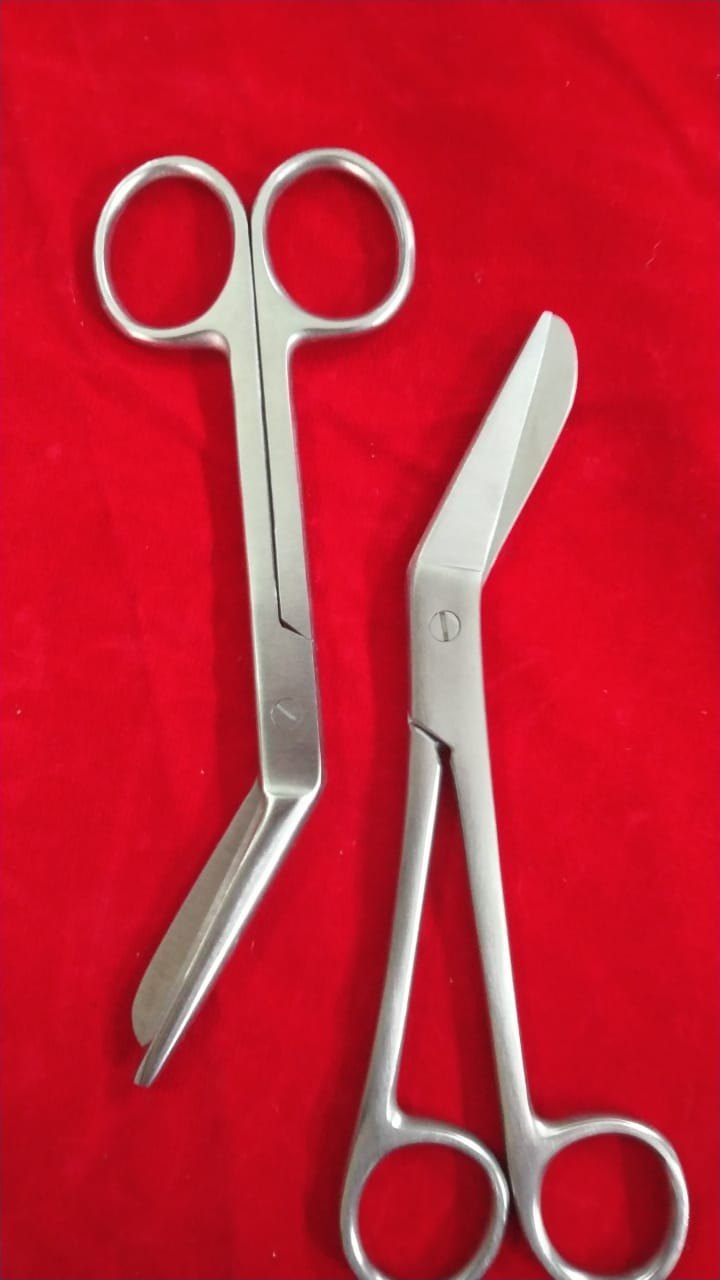
Appeared in: AIIMS Rishikesh & Jodhpur NO - 2017
Explanation
- The instrument shown is an episiotomy scissor, which is specifically designed for performing an episiotomy.
- Its most distinct feature, clearly visible in the image, is the angled blades.
- One blade has a blunt, flattened tip that serves as a protective barrier, shielding the baby's head from injury during the incision.
- This specialized design allows for a safe and precise cut of the perineum to facilitate delivery.
Why Other Options Were Wrong
- Option B: Allis forceps are grasping instruments, not cutting instruments. They have sharp, interlocking teeth at the tips used to hold or retract heavy tissue.
- Option C: Mayo scissors are heavy surgical scissors used for cutting thick tissues like fascia or sutures. While they can be curved, they do not have the characteristic angled blades and protective blunt tip of an episiotomy scissor.
- Option D: Tooth forceps are a category of grasping instruments characterized by teeth at the tips for a secure hold on tissue. They are not scissors and are not used for cutting.
Related Visual

Clinical Relevance
- Nursing practice connection: Use the key finding related to Identification of surgical instruments used in obstetrics to guide bedside assessment, documentation, and the next nursing action.
- Using the correct surgical instrument is paramount for patient safety. Using a standard scissor like a Mayo scissor for an episiotomy could lead to a serious laceration injury to the baby's scalp or face.
- Nurses play a critical role in the operating room and delivery suite by preparing surgical trays, ensuring the correct instruments are available, and being able to identify them for the practitioner.
- What if? If an episiotomy scissor is not available, the procedure might be deferred if possible, or the practitioner would have to proceed with extreme caution using a different instrument, significantly increasing the risk of fetal injury. This highlights the importance of proper equipment preparation.
How to Approach the Question
- First, identify the general category of the instrument in the image. You can see it has finger rings and two blades that pivot, so it is a type of scissor.
- Next, carefully observe the specific features of the blades. Notice that the blades are not straight but are set at an angle to the handles.
- Look closely at the tips of the blades. You will see that one blade is sharp, and the other has a blunt, flattened end.
- Consider the purpose of these unique features. The angle allows for easier access and cutting in the perineal area, and the blunt tip is a safety feature to protect the baby.
- Evaluate the given options. 'Episiotomy scissor' is specifically designed for this purpose with these features. The other options are either grasping tools (forceps) or general-purpose cutting scissors (Mayo) without these specific adaptations.
Concept Tested & Keywords
- Concept Tested: Identification of surgical instruments used in obstetrics.
- Stem keywords: Identify, image, picture
- Lead-in keywords: Identify
Question ID
QmKNtLXPf1oSkwkV3B9nk2
Reference Book
E6 Midwifery Obstetrics and Gynecology Nursing Sandeep Kaur p. 18-26
E6 Gynecology Williams p. 429-435
Practise the full AIIMS Rishikesh & Jodhpur NO - 2017
Attempt every question from this paper in a timed mock, then review the full solution for each one.
More Practical Obstetrics Questions
- Identify the following instrument:
- Identify the blade used:
- Identify the instrument used by a nurse in the following image:
- Match the following
- Identify, which of the following retractor is used in abdominal surgery?
- The instrument used for measuring fetal heart rate (FHR):
- What is the name of this retractor?
- Identify the following instrument?
- Green Armytage forceps is used to arrest bleeding in?
- Identify the following instrument?
More AIIMS Rishikesh & Jodhpur NO - 2017 Questions
- A phenomenon during therapeutic nurse-client relationship when the client unconsciously attributes (or transfers) to the nurse feelings and behaviora…
- A nurse in labor performing a vaginal assessment on a pregnant client in labor notes the presence of the umbilical cord protruding from the uterus. W…
- The term used to describe the discharges from the uterus following delivery during the initial puerperium is known as?
- Identify the following image?& x20;
- The normal rate of cervical dilation in the active phase of the first stage of labor in a primigravida is?
- False sensory perception without external stimuli is called?
- During blood transfusion, the most important nursing responsibility is?
- Kit supplied at sub center is?
- A patient in the emergency department has an endotracheal tube in place and is on the ventilator. His relative comes running to you telling you that…
- Which of the following is not a mood stabilizing agent?