
AIIMS Delhi NO- 2019
Nursing Foundation
Hard
Look at the image and tell which of the following is incorrect combination:
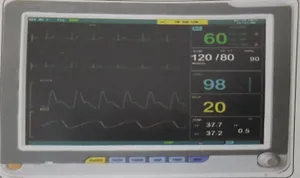
Appeared in: AIIMS Delhi NO- 2019
Explanation
- The question asks to identify the incorrect color-parameter combination based on standard medical conventions.
- While the MAP value is displayed in white on the monitor in the image, white is a generic color used for multiple parameters like NIBP and Temperature.
- Invasive blood pressure, which includes MAP, is typically represented by the color red for immediate identification of hemodynamic status.
- The other options (Green for Heart Rate, Light Blue for SpO2, Yellow for Respiration) represent strong, universally accepted color-coding standards in medical devices.
- Therefore, the association of 'White' with 'MAP' is the least specific and considered the incorrect standard combination among the choices.
Why Other Options Were Wrong
- Option A: This is a correct combination. Green is the universal standard color for displaying the ECG waveform and heart rate on patient monitors.
- Option B: This is a correct combination. Light blue or cyan is the universal standard color for displaying the SpO2 (pulse oximetry) waveform and value.
- Option C: This is a correct combination. Yellow is a widely used standard color for respiratory parameters, including respiration rate and capnography (EtCO2).
Related Visual

Clinical Relevance
- Nursing practice connection: This is primarily an exam-oriented knowledge point with limited direct bedside application, so retain Identification of standard color codes for vital signs on a patient monitor as background academic context rather than a clinical decision trigger.
- Rapid identification of vital signs is critical in emergencies. Standardized color-coding allows healthcare professionals to quickly assess a patient's status, regardless of the specific monitor model.
- An incorrect reading or misinterpretation of a parameter due to non-standard display could lead to delayed or inappropriate treatment, posing a significant patient safety risk.
- What if? If the monitor displayed the heart rate in red, a nurse might mistakenly assume it represents invasive arterial pressure, leading to confusion about the patient's hemodynamic monitoring and potentially misinterpreting alarms.
How to Approach the Question
- First, carefully observe the image of the patient monitor. Identify each parameter being displayed and the color used for its number and waveform.
- Match the observations from the image with the combinations given in the options. For example, check if the heart rate is indeed green, SpO2 is light blue, etc.
- The question asks for the 'incorrect' combination. This requires you to know the universal standards for monitor color-coding, not just what is shown on this one screen.
- Evaluate each option against these universal standards. Green for ECG, Blue for SpO2, and Yellow for Respiration are strong, consistent standards.
- Consider the option that represents the weakest or non-standard association. While MAP is white on this monitor, white is a generic color, and invasive pressures (often red) have a more specific color code. This makes the 'White-MAP' link the most likely intended 'incorrect' standard.
Concept Tested & Keywords
- Concept Tested: Identification of standard color codes for vital signs on a patient monitor.
- Stem keywords: patient monitor, color code, vital signs
- Lead-in keywords: incorrect combination
- Clinical cues: The image provided is a multi-parameter patient monitor, which is key to answering the question.
- Negative lead-in flag: incorrect
Question ID
QHFUCG_C8vEcDhScs4CtQ1
Practise the full AIIMS Delhi NO- 2019
Attempt every question from this paper in a timed mock, then review the full solution for each one.
More Nursing Care & Specific Procedures Questions
- Identify the procedure done in the given image:
- Match the following:
- Identify the airway used in emergency in the following image:
- According to hospital's protocol during emergency situation "code pink" is used for which condition?
- Which is the appropriate nursing action by nursing officer after taking ABG sample from radial artery?
- The common veins used for placement of central line are all; EXCEPT:
- Who discovered Catgut suture?
- The sutures used to close deep, multi-layer lacerations are:
- You are preparing to suction a patient who is intubated with a 4.5 mm endotracheal tube (ETT). What size suction catheter would you choose to minimiz…
- Which types of bandages are used on injury of ankle joints?
More AIIMS Delhi NO- 2019 Questions
- A nurse is preparing to give bath to admitted patient with perineal problem. Which of the following will help the patient?
- In the absence of nurse from floor, patient falls from bed. This type of injury belongs to:
- Patient's Medical record with all essential information is responsibility of:
- Post-partum women having bleeding within 24 hrs after delivery is called:
- In which condition, distal pulse is preferred rather than apical pulse?
- A pre-eclampsia woman's baby is lying with her mother. Neonate is born in 37 weeks. After 57 hours, when nurse is monitoring vital signs of baby, tem…
- A woman with 3rd day postpartum has complaint of engorgement in both breasts. What is cut off temperature for fever in postpartum women?
- Universal blood donor?
- WHO hand wash time with soap?
- Why it is necessary to remove dark coloured nail paint before surgery?