
NORCET 5 mains
Medical Surgical Nursing
Medium
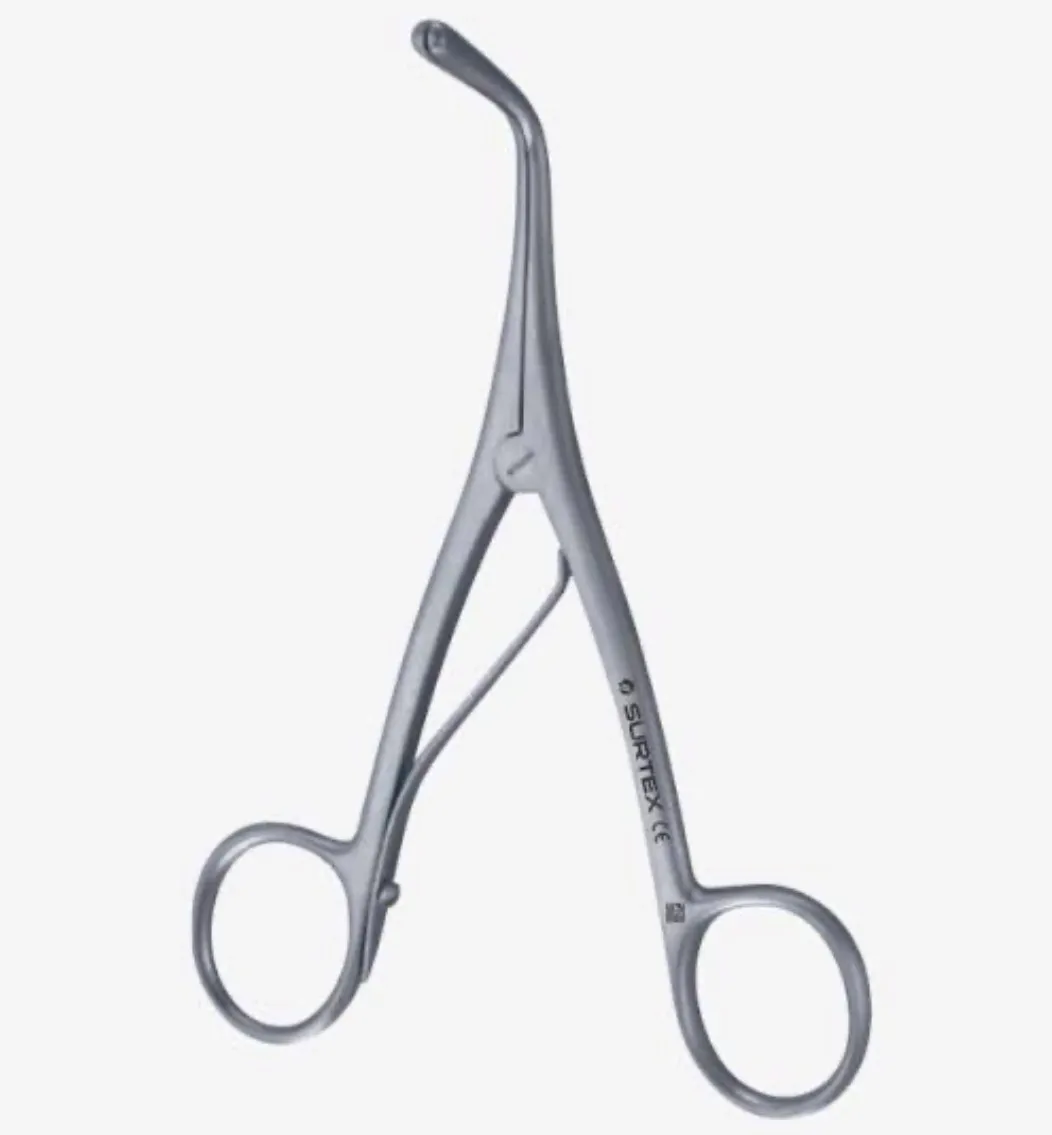
Identify the following instrument?
Appeared in: NORCET 5 mains
Explanation
- The instrument in the image is a Tracheal Dilator, specifically a Trousseau Tracheal Dilator.
- Its key identifying features are the scissor-like handles and the two blunt, curved blades at the working end that spread apart when the handles are squeezed.
- This spreading mechanism is specifically designed to open a tracheal stoma (the surgical opening into the trachea) to allow for the insertion of a tracheostomy tube.
- This function is critical for airway management in patients with a tracheostomy.
Why Other Options Were Wrong
- Option A: Cervical dilators are not hinged, spreading instruments. They are a set of solid, graduated rods of increasing diameter (e.g., Hegar dilators) used to slowly and progressively stretch the cervical os.
- Option B: Uterine dilator is another term for a cervical dilator. Like cervical dilators, these are solid, graduated rods and do not have the spreading mechanism seen in the image.
- Option C: Urethral dilators (or sounds) are long, thin, and often curved instruments designed to be passed through the urethra to treat strictures. Their shape is completely different from the short, stout, spreading instrument shown.
Related Visual

Clinical Relevance
- Nursing practice connection: This is primarily an exam-oriented knowledge point with limited direct bedside application, so retain Surgical Instrument Identification as background academic context rather than a clinical decision trigger.
- A tracheal dilator is a critical piece of emergency equipment that must be kept at the bedside of every patient with a tracheostomy.
- In the event of accidental decannulation (the tracheostomy tube falling out), the stoma can begin to close quickly. The nurse must use the tracheal dilator to immediately re-open the stoma to maintain a patent airway until the tube can be reinserted.
- What if? If a patient with a new tracheostomy (less than 7 days old) accidentally decannulates and a tracheal dilator is not available? This is a medical emergency. The nurse should call for immediate help (like a rapid response team), attempt to maintain the airway with a bag-valve-mask over the mouth and nose (if possible), and prepare for potential emergency re-intubation.
How to Approach the Question
- First, carefully examine the instrument in the image, paying close attention to its key parts: the handle, the joint/hinge, and the working end (the blades).
- Analyze the mechanism of action. Notice that squeezing the handles will cause the blades at the tip to spread apart. This indicates a function of dilating or spreading tissue, rather than cutting or grasping.
- Consider the shape of the working end. The blades are short, blunt, and curved. This shape is suitable for entering a pre-existing opening (like a stoma) and spreading it without causing injury.
- Evaluate the options provided. Compare the instrument's features to the known function of each type of dilator.
- Eliminate options based on mismatching form and function. Cervical, uterine, and urethral dilators are typically solid rods for progressive dilation, not hinged spreaders.
- Conclude that the instrument's form (spreading blades) and function (dilating an opening) are perfectly matched for a Tracheal Dilator used in tracheostomy care.
Concept Tested & Keywords
- Concept Tested: Surgical Instrument Identification
- Stem keywords: instrument, identify
- Lead-in keywords: Identify
Question ID
Q8q7omYzl8L6of5JJM2oIu
Reference Book
E6 Gynecology Williams pp. 103-131, 102-130
Practise the full NORCET 5 mains
Attempt every question from this paper in a timed mock, then review the full solution for each one.
More Surgical Instrumentation Questions
- The following instrument is used in which surgery?
- Identify the following image? & x20;
- Identify the following instrument?& x20;
- Identify the size of the surgical blade? (NORCET-2021)& x20;
- Identify the following instrument?
- Identify the instrument?& x20;
- Number of Yantras:
- Identify this instrument.
- The instrument used to grasp and hold the uterus or cervix during vaginal examinations, intrauterine devices placement or removal, and cervical dilat…
More NORCET 5 mains Questions
- Identify the following instrument?
- Maximum level of alcoholism legally allowed for driving in India?
- When evaluating the therapeutic response for a client receiving a heparin infusion, which laboratory results should the nurse monitor?
- A nurse should carefully monitor a client for the following side effect of MgSO4?
- Hypoxia is the primary problem related to near-drowning victims. The first organ that sustains irreversible damage after submersion in water is the?
- Iron dextran (Imferon) is a parenteral iron preparation. The nurse should know that it:
- A 56-year-old patient is admitted to the psychiatric unit in a state of total despair. She feels hopeless and worthless, has a flat affect and very s…
- A client is admitted to the hospital for an induction of labor owing to a gestation of 42 weeks confirmed by dates and ultrasound. When she is dilate…
- A 3-year-old child is hospitalized with burns covering her trunk and lower extremities. Which of the following would the nurse use to assess adequacy…
- Under National Family Welfare Program, IUCD 380 copper T would be effective for?