
NORCET 5 mains
Obstetrics & Gynaecology
Easy
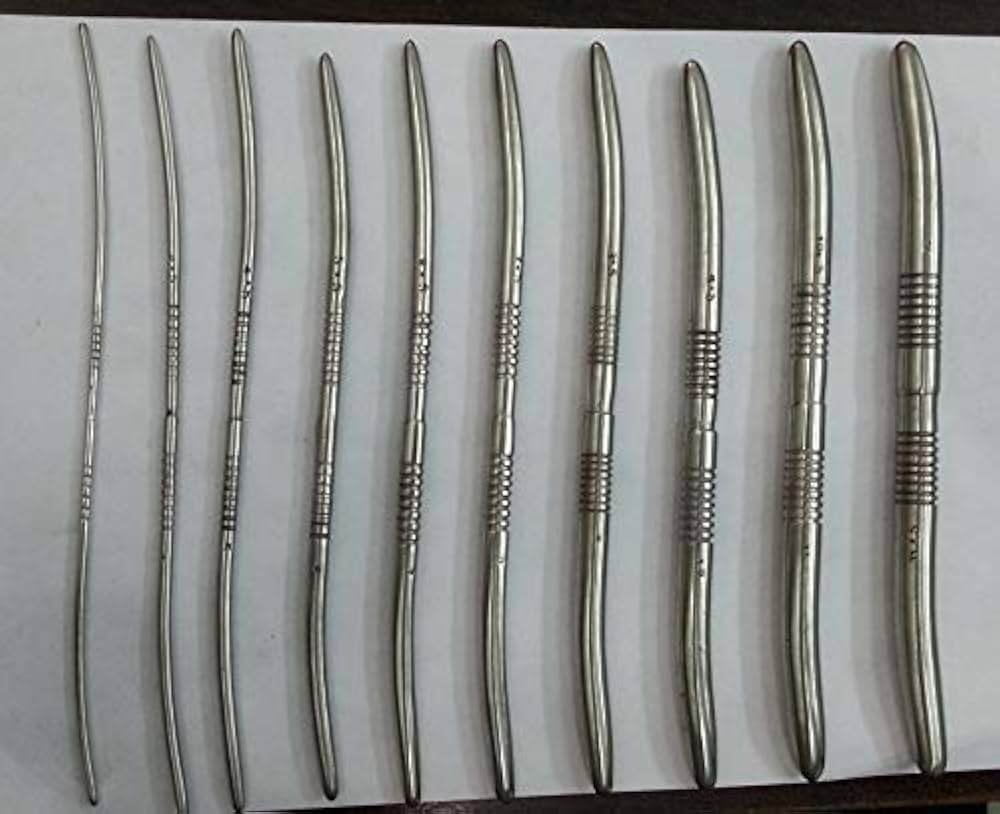
Identify the following instrument?
Appeared in: NORCET 5 mains
Explanation
- The image displays a set of Hegar's cervical dilators, which are used in gynecological procedures.
- These instruments are characterized by their solid, metallic, rod-like structure with a slight curve and smooth, rounded tips.
- The set contains dilators of progressively increasing diameters, allowing for the gradual and safe dilation of the cervical canal.
- This dilation is necessary to gain access to the uterine cavity for procedures such as Dilatation and Curettage (D&C), hysteroscopy, or IUCD insertion.
Why Other Options Were Wrong
- Option B: While the ultimate goal is often to access the uterus, the instrument's direct action is on the cervix. 'Cervical dilator' is the more precise and standard term for this instrument set.
- Option C: Urethral dilators are used in urology to open strictures in the urethra. While some may appear similar, many have a more pronounced curve (like Van Buren sounds) and are used for a different anatomical passage.
- Option D: Tracheal dilators have a completely different design, often resembling forceps (like a Trousseau dilator). They are used to hold a tracheal stoma open during an emergency or for tube changes.
Related Visual

Clinical Relevance
- Nursing practice connection: This is primarily an exam-oriented knowledge point with limited direct bedside application, so retain Instrument Identification: Cervical Dilators as background academic context rather than a clinical decision trigger.
- A nurse's role includes ensuring the correct set of instruments is available and sterile for the procedure. This includes checking that a full range of dilator sizes is present.
- Post-procedure, the nurse monitors the patient for signs of complications such as excessive bleeding, severe cramping, or signs of uterine perforation (e.g., sharp abdominal pain, fever, hemodynamic instability).
- Patient education is key. The nurse can explain the purpose of the procedure and what the patient might experience, helping to alleviate anxiety.
How to Approach the Question
- First, carefully examine the image of the instruments. Note their key features: they are a set of metallic rods, they have a slight curve, and they are of varying thicknesses.
- Recognize that these are graduated instruments, meaning they are used in sequence from smallest to largest.
- Consider the function based on the shape. The rod-like shape is for entering and widening a canal or orifice. The gentle curve is designed to follow a natural anatomical path.
- Evaluate the options provided. A 'dilator' is an instrument that widens a passage.
- Differentiate between the types of dilators based on the body part they are used for: Cervical (cervix), Urethral (urethra), Tracheal (trachea).
- Based on the classic appearance (graduated, curved rods), identify them as cervical dilators, which are standard instruments in gynecology.
Concept Tested & Keywords
- Concept Tested: Instrument Identification: Cervical Dilators
- Stem keywords: Identify, instrument
- Lead-in keywords: Identify
Question ID
QH9-wzduR55LWSbuZOTQ5U
Reference Book
E6 Gynecology Williams pp. 99-127, 102-130
Practise the full NORCET 5 mains
Attempt every question from this paper in a timed mock, then review the full solution for each one.
More Operative Obstetrics Questions
- A normal vaginal labor is conducted. Which activity will always be present in this procedure?
- Major benefit of doing mediolateral episiotomy is?
- What is the characteristics of false pain for labour? (Choose the most appropriate option from below)
- Compared to the use of the vacuum extractor, forceps delivery is associated with increased risk of?
- Third degree perineal tear is involvement of?
- Vulsellum forceps used for clipping the?
- All of the following are characteristics of FALSE labor, Except?
- Position given to a mother for a cesarean section?
- Incision made into the perineum to enlarge the vaginal outlet and facilitate delivery is called?
- Vulsellum forceps is used for gripping the
More NORCET 5 mains Questions
- Maximum level of alcoholism legally allowed for driving in India?
- When evaluating the therapeutic response for a client receiving a heparin infusion, which laboratory results should the nurse monitor?
- A nurse should carefully monitor a client for the following side effect of MgSO4?
- Hypoxia is the primary problem related to near-drowning victims. The first organ that sustains irreversible damage after submersion in water is the?
- Iron dextran (Imferon) is a parenteral iron preparation. The nurse should know that it:
- A 56-year-old patient is admitted to the psychiatric unit in a state of total despair. She feels hopeless and worthless, has a flat affect and very s…
- A client is admitted to the hospital for an induction of labor owing to a gestation of 42 weeks confirmed by dates and ultrasound. When she is dilate…
- A 3-year-old child is hospitalized with burns covering her trunk and lower extremities. Which of the following would the nurse use to assess adequacy…
- Under National Family Welfare Program, IUCD 380 copper T would be effective for?
- A 38-year-old female client with a history of chronic schizophrenia, paranoid type, is currently an outpatient at the local mental health and mental…