
AIIMS Delhi NO- 2019
Medical & Surgical Nursing
Easy
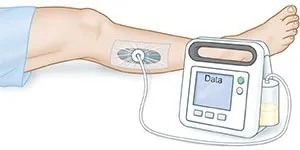
This type of dressing is known as:
Appeared in: AIIMS Delhi NO- 2019
Explanation
- The image shows a complete therapeutic system, not just a simple dressing.
- The key components visible are a sealed dressing on the leg, tubing, a portable electronic pump, and a collection canister for fluid.
- This entire apparatus is characteristic of Negative Pressure Wound Therapy (NPWT), which uses a vacuum (negative pressure) to promote wound healing.
- The system works by drawing fluid from the wound, reducing swelling, and stimulating the growth of new tissue.
Why Other Options Were Wrong
- Option A: While a foam pad is often used as the wound filler in an NPWT system, 'foam dressing' refers only to the pad itself, not the entire active therapy system with the pump.
- Option B: 'Sponge dressing' is a general term, often referring to gauze. Like foam, gauze can be used as a filler for NPWT, but the term does not describe the complete system shown.
- Option D: This is the direct opposite of the therapy shown. The device creates a vacuum, which is negative (sub-atmospheric) pressure, to pull fluids away from the wound. Positive pressure is not used in this type of wound dressing.
Related Visual

Clinical Relevance
- Nursing practice connection: This is primarily an exam-oriented knowledge point with limited direct bedside application, so retain Identification of wound care devices and therapies as background academic context rather than a clinical decision trigger.
- Nurses play a crucial role in managing NPWT, including applying the dressing, ensuring an airtight seal, monitoring the pump settings, and assessing the wound and periwound skin at each dressing change.
- Patient safety involves monitoring for complications such as bleeding, infection, or skin breakdown under the adhesive film.
- What if? If the NPWT pump alarm sounds, the nurse should first check for an air leak in the dressing seal, ensure the tubing is not kinked or clamped, and verify that the collection canister is not full. These are the most common causes of an alarm.
How to Approach the Question
- First, analyze the image to identify all the components of the device shown. Note the dressing on the patient's leg, the tube connecting it to a machine, the machine itself (a pump), and the attached collection canister.
- Recognize that this is an active therapeutic system, not just a passive dressing, due to the presence of the electronic pump.
- Consider the function of a vacuum pump. It creates suction, which is negative pressure, to draw things out.
- Evaluate the options based on this understanding. 'Foam' and 'Sponge' dressings are components, not the whole system.
- Differentiate between 'Negative pressure' and 'Positive pressure'. Since the device uses suction, 'Negative pressure dressing' is the correct description of the therapy.
- Therefore, select the option that accurately describes the entire system and its mechanism of action.
Concept Tested & Keywords
- Concept Tested: Identification of wound care devices and therapies.
- Stem keywords: dressing, type
- Lead-in keywords: known as
- Clinical cues: Image of a dressing connected to a portable pump with a collection canister.
Question ID
QmbtSMMQwvae6_oj0WhdpX
Reference Book
E6 Nursing Fundamentals Potter Perry 12e Part 6 pp. 97-99, 98-100
Practise the full AIIMS Delhi NO- 2019
Attempt every question from this paper in a timed mock, then review the full solution for each one.
More Integumentary Function Questions
- The following picture shows is bedsore present in bedridden patient. Which grade of bedsore is present?
- In second degree bedsore, there is an involvement of:
- What is the bath used to remove the irritation of certain types of skin diseases and provide soothing effect?
- A female patient has come with facial burn injury into the emergency department in conscious condition. What will be the treatment for this patient?
- A patient comes into the emergency with a burn injury of 40% then what is first nursing intervention?
- A nurse caring a bedridden patient with a pressure ulcer, 2 hourly position changes and massaging & rubbing the back but pressure sore does not heal.…
- Second degree burn considered?
- Identify the stage of pressure ulcer
- A 23 year old man comes to the emergency department with thermal burns. In this case according to rule of nine which part of the body burned maximum?
- Identify the condition shown in image:
More AIIMS Delhi NO- 2019 Questions
- A nurse is preparing to give bath to admitted patient with perineal problem. Which of the following will help the patient?
- In the absence of nurse from floor, patient falls from bed. This type of injury belongs to:
- Patient's Medical record with all essential information is responsibility of:
- Post-partum women having bleeding within 24 hrs after delivery is called:
- In which condition, distal pulse is preferred rather than apical pulse?
- A pre-eclampsia woman's baby is lying with her mother. Neonate is born in 37 weeks. After 57 hours, when nurse is monitoring vital signs of baby, tem…
- A woman with 3rd day postpartum has complaint of engorgement in both breasts. What is cut off temperature for fever in postpartum women?
- Universal blood donor?
- WHO hand wash time with soap?
- Why it is necessary to remove dark coloured nail paint before surgery?