
NORCET 1 - 2020
Nursing Foundation
Easy
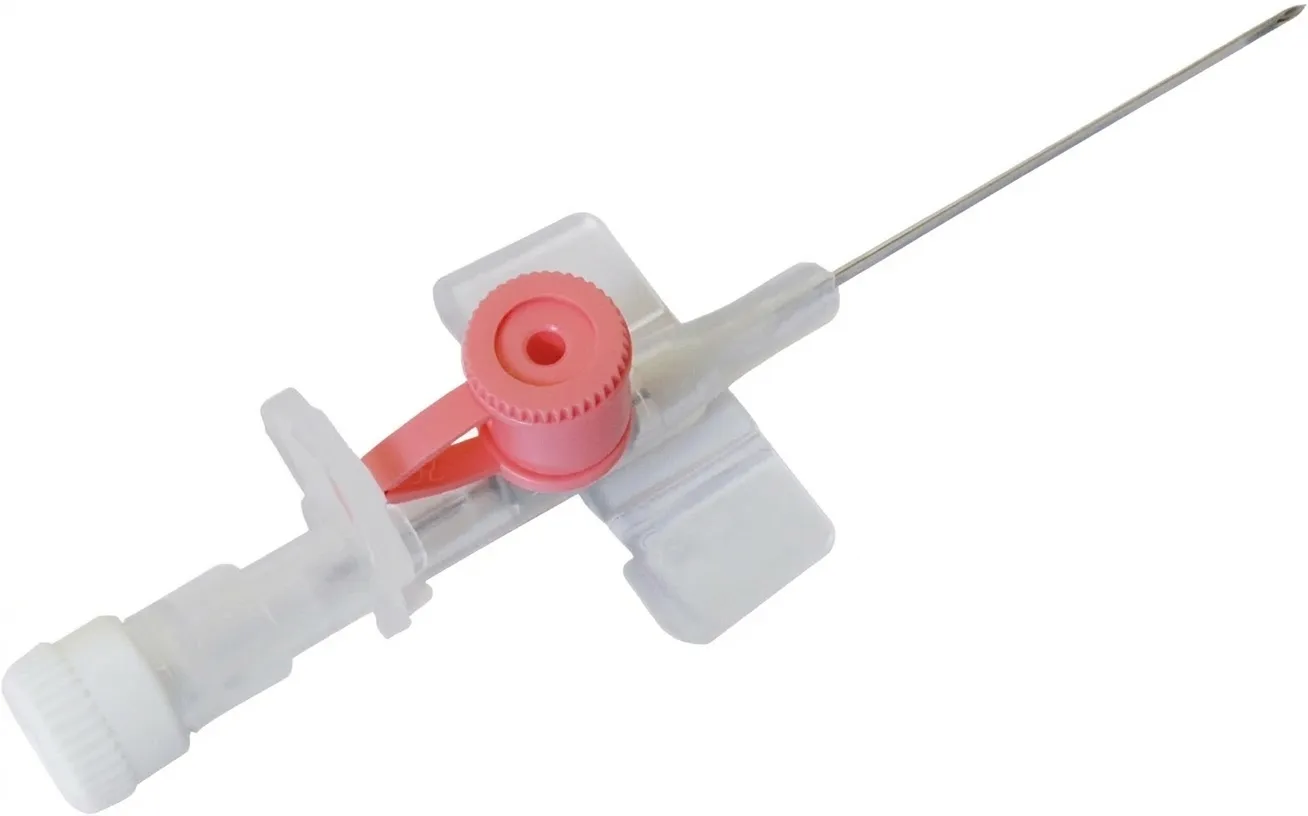
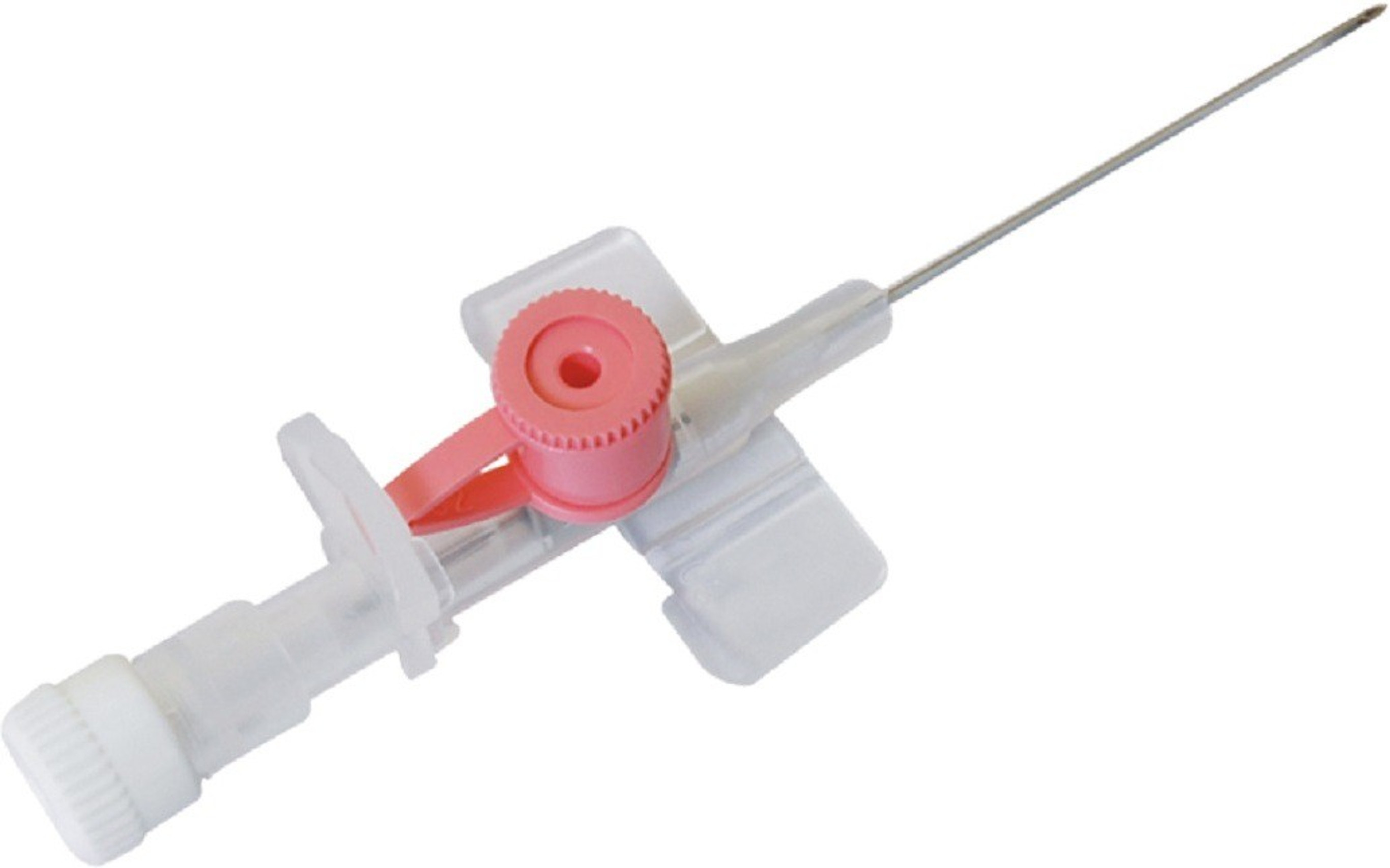
Identify the size of IV Cannula in the image?
Appeared in: NORCET 1 - 2020
Explanation
- The image shows an IV cannula with a pink hub.
- In the universal color-coding system for IV cannulas, pink signifies a 20-gauge (20 G) size.
- A 20 G cannula has a flow rate of approximately 60 mL/min.
- It is commonly used for routine IV fluid administration, giving medications, and standard blood transfusions in adult patients.
Why Other Options Were Wrong
- Option A :A 14 G cannula has an orange hub, not pink. It is a much larger size used for massive trauma and rapid infusions.
- Option B :A 16 G cannula has a grey hub. While used for trauma and surgery, it is not represented by the pink color in the image.
- Option C :An 18 G cannula has a green hub. It is larger than the 20 G and is not pink.
Related Visual

- Visual 1: Chart - A comparative chart showing all IV cannula sizes (14G to 26G) with their corresponding colors, flow rates, and primary clinical indications. This provides a comprehensive reference for students.
- Visual 2: Infographic - An infographic illustrating the inverse relationship between gauge number and cannula diameter. For example, showing a large 14G cannula next to a small 24G cannula to visually reinforce the concept.
Clinical Relevance
- Nursing practice connection: This is primarily an exam-oriented knowledge point with limited direct bedside application, so retain Identification of IV cannula size based on universal color coding as background academic context rather than a clinical decision trigger.
- Selecting the appropriate IV cannula size is a fundamental nursing skill that directly impacts patient safety and treatment effectiveness. Using a cannula that is too small can delay the delivery of critical fluids or medications, while one that is too large can cause unnecessary pain and vein trauma.
- What if? If the patient in this scenario suddenly required a rapid blood transfusion due to unexpected bleeding, the 20G (pink) cannula might be insufficient. The nurse would need to consider inserting a larger bore cannula, such as an 18G (green) or 16G (grey), to ensure the blood can be administered quickly without lysing the red blood cells.
- In emergency situations, the color-coding system allows for immediate identification and selection of the correct cannula, saving valuable time.
How to Approach the Question
- First, carefully observe the image provided with the question. Identify the key feature, which in this case is the color of the IV cannula's hub.
- The hub in the image is pink.
- Next, recall the universal color-coding system for IV cannulas.
- Match the observed color (pink) to the corresponding gauge size in the color-coding system.
- Confirm that pink corresponds to 20 G. Select this as the correct answer and mentally cross-check the colors for the other options (14G-Orange, 16G-Grey, 18G-Green) to ensure accuracy.
Concept Tested & Keywords
- Concept Tested: Identification of IV cannula size based on universal color coding.
- Stem keywords: IV Cannula, size, image
- Lead-in keywords: Identify
- Clinical cues: The pink color of the cannula hub is the primary clinical cue for identification.
Question ID
QZKTfyKWzWe-V0XnbX_Ith
Practise the full NORCET 1 - 2020
Attempt every question from this paper in a timed mock, then review the full solution for each one.
More Administration of medications Questions
- Which is the appropriate site to administer Intramuscular injections in children?
- The route of Mantoux skin test is:
- What is the size of needle for Intramuscular (IM) injection in adults?
- You are administering an intravenous medication to a patient, and the medication label instructs you to infuse 50 mL over 15 minutes. What is the cor…
- A physician orders a medication to be administered to a patient in a dose of 200mg twice daily (BD). The pharmacy provides tablets of the medication,…
- Desired dose of Morphine for a patient is 0.4 mg. Dose available is 1 mg/mL. The correct formulation for this patient is:
- Cefuroxime sodium, 1 g in 50 mL normal saline (NS), is to be administered over 30 minutes to a client with an infection. The drop factor is 15 drops…
- To ensure accurate medication administration and prevent errors, what is the most comprehensive method for verifying a patient's identity?
- Maximum chance of sciatic nerve injury during which site of I.M injection?
- Identify route of drug administration:
More NORCET 1 - 2020 Questions
- The relation between the fetal presenting part and maternal pelvis is known as?
- Which vaccine can be frozen?
- Which vaccine, after administration, forms blisters, heals by itself, and forms a permanent scar mark?
- Identify the conjugate measured in the picture?& x20;
- A post LSCS woman passes 400 ml urine in the past 24 hours. This condition is known as?
- Red color urine is caused by which anti-tubercular drug?
- Visualization of bone occurs in which stage of burn?
- The given retractor is used in which of the following surgeries?
- What will you do if you have a needle stick injury from an HIV patient?
- A 28-year-old primigravida comes to the ANC OPD. How many additional Kcal will you recommend?