
DSSSB 13 August 2024
Medical & Surgical Nursing
Medium
Which article is shown in the given image?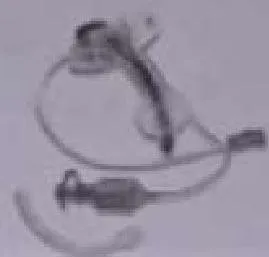
Appeared in: DSSSB 13 August 2024
Explanation
- The image displays a cuffed tracheostomy tube (TT).
- This is identified by its characteristic short, curved shape and the presence of a neck flange (plate) designed to secure the tube over a tracheal stoma.
- The key feature confirming it is 'cuffed' is the visible inflation line connected to a pilot balloon, which is used to inflate a cuff at the distal end of the tube inside the trachea.
Why Other Options Were Wrong
- Option A: Endotracheal (ET) tubes are much longer as they are inserted through the mouth or nose, and they lack a neck flange. The tube in the image is short, has a flange, and also possesses a cuffing mechanism (pilot balloon).
- Option B: While it has a cuff (indicated by a pilot balloon), an ET tube is significantly longer than the tube shown and does not have a neck flange for securing at a stoma.
- Option D: The tube in the image clearly shows an inflation line and a pilot balloon, which are the components of the cuffing system. An uncuffed tube would lack these parts.
Related Visual

Clinical Relevance
- Nursing practice connection: This is primarily an exam-oriented knowledge point with limited direct bedside application, so retain Identification of artificial airways and their specific features as background academic context rather than a clinical decision trigger.
- Cuffed tracheostomy tubes are essential for patients requiring positive pressure mechanical ventilation or those with a high risk of aspirating oral or gastric secretions.
- A critical nursing responsibility is to monitor the cuff pressure regularly (typically keeping it between 20-30 cm H₂O) to ensure an adequate seal without causing tracheal wall ischemia, necrosis, or a tracheoesophageal fistula.
- What if? If the pilot balloon feels flat or does not hold air after inflation, it indicates a cuff leak. This is an airway emergency as it compromises ventilation and aspiration protection. The nurse must immediately notify the respiratory therapist and physician and prepare for a tracheostomy tube change.
How to Approach the Question
- First, examine the overall shape and length of the tube in the image. Note the short, curved design and the presence of a flat plate (flange) around the tube's neck.
- Recognize that the flange is characteristic of a tracheostomy tube (TT), which is inserted through a stoma in the neck. This helps rule out endotracheal (ET) tubes.
- Next, look for additional components. Identify the thin line running alongside the main tube that ends in a small balloon with a valve.
- Identify this as the inflation line and pilot balloon, which indicates the presence of an inflatable cuff.
- Combine these two findings: a tracheostomy tube with a cuff. This leads to the correct answer.
Concept Tested & Keywords
- Concept Tested: Identification of artificial airways and their specific features.
- Stem keywords: article, image
- Lead-in keywords: Which
Question ID
QTdur8q-xPTUyomdVQnV2s
Reference Book
E6 Nursing Fundamentals Taylor p. 736-738
Practise the full DSSSB 13 August 2024
Attempt every question from this paper in a timed mock, then review the full solution for each one.
More Gas Exchange and Respiratory Function Questions
- Which is the most relevant knowledge about oxygen administration to a client with COPD?
- Patient in emergency department diagnosed to have fluid and air present in lung. What is the above-mentioned condition known as?
- Patient is suffering from dyspnea. Which position will you provide for patient to relieve?
- Which of the following is not involved in chest physiotherapy?
- Respiration which is abnormally shallow for two or three breaths followed by irregular period of apnea is termed:
- Identify the following instrument which is used in diagnostic procedures:
- Identify the instrument shown in the following image:
- Identify the tube in the following image:
- A patient suddenly develops respiratory difficulties such as dyspnea, what is the first priority of the nursing officer?
- Which of the following method is used for high flow oxygen administration:
More DSSSB 13 August 2024 Questions
- Which of the following is NOT a component of mental status examination?
- Which therapy is being shown in the given image?
- Which of the following correctly describes esotropia?
- The tablet Arkaminis used in the management of:
- A patient was brought to the emergency department and a blood sample was sent for serum electrolyte level. The report shows that the serum potassium…
- The concept of therapeutic community was first developed by:
- The superego functions based on:
- Reed-Sternberg cells are distinctive, giant cells have light microscopy in biopsies from individuals with the following diseases?
- Which of the following intakes is usually associated with "Flashback phenomenon"?
- Which of the following drugs is commonly used to treat vertigo?