
AIIMS Delhi NO- 2019
Pharmacology
Easy
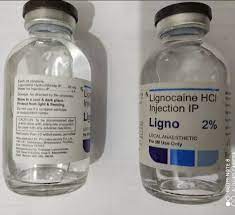
The following medication in the picture act as :
Appeared in: AIIMS Delhi NO- 2019
Explanation
- The image shows a vial of Lignocaine HCl 2% Injection, a common medication.
- The label on the vial explicitly identifies the medication as a "LOCAL ANAESTHETIC".
- Lignocaine (also known as Lidocaine) is a widely used drug that causes a temporary loss of sensation, including pain, in a specific area of the body.
- Its mechanism of action involves blocking sodium channels in nerve fibers, which prevents the transmission of pain signals.
Why Other Options Were Wrong
- Option B: Tooth extraction is a dental procedure, not the action of the medication. It is an application or indication for using a local anesthetic.
- Option C: Cannula insertion is a medical procedure. While a local anesthetic might be used to numb the skin before insertion to reduce pain, this is a use case, not the drug's action.
- Option D: Oral procedure is a broad category of medical interventions performed in the mouth. It describes a setting or type of application for a local anesthetic, not the drug's pharmacological class.
Related Visual

Clinical Relevance
- Nursing practice connection: This is primarily an exam-oriented knowledge point with limited direct bedside application, so retain Identification of drug class from visual information and pharmacological knowledge as background academic context rather than a clinical decision trigger.
- Nurses must be able to correctly identify medications by reading labels to ensure patient safety. This includes understanding the drug's name, concentration, and class.
- Differentiating between a drug's action (pharmacodynamics) and its indications (therapeutic uses) is a fundamental skill in safe medication administration.
- What if the vial was labeled 'Lignocaine with Adrenaline'? The nurse must recognize this is a different formulation. Adrenaline is a vasoconstrictor added to prolong the anesthetic effect and reduce bleeding. This combination is contraindicated for use on end-artery areas like fingers, toes, nose, and penis due to the risk of ischemic necrosis.
How to Approach the Question
- First, carefully examine the image provided. Read all the text visible on the medication's label.
- Identify the key information: the drug's name ('Lignocaine HCl'), its concentration ('2%'), and its pharmacological class, which is explicitly stated as 'LOCAL ANAESTHETIC'.
- Analyze the question, which asks what the medication 'act as'. This is asking for the drug's primary function or classification.
- Evaluate the given options. 'Local anesthetic' directly matches the information on the label and describes the drug's action.
- Recognize that the other options ('Tooth extraction', 'Cannula insertion', 'Oral procedure') are examples of procedures or applications where this drug is used, not the action of the drug itself.
- Select the option that correctly identifies the drug's pharmacological class as stated on its packaging.
Concept Tested & Keywords
- Concept Tested: Identification of drug class from visual information and pharmacological knowledge.
- Stem keywords: medication, picture, act as
- Lead-in keywords: act as
- Clinical cues: The label on the vial clearly states 'LOCAL ANAESTHETIC', which directly answers the question.
Question ID
QOWJS7HSTcKP-LBoWsP63f
Reference Book
E6 Pharmacology Nurses Shanbhag 3e p. 147-149
E6 Nursing Fundamentals Potter Perry 12e Part 5 p. 162-164
Practise the full AIIMS Delhi NO- 2019
Attempt every question from this paper in a timed mock, then review the full solution for each one.
More Drugs acting on peripheral nervous system Questions
- Lignocaine and adrenaline not used for repair of injury to digitalis because:
- What is the purpose of using succinylcholine during the Electroconvulsive therapy?
- Adrenaline used for dental anesthesia is?
- Which of the following is a muscle relaxant?
- Lidocaine does not cause the following symptoms?
- What is the main complication of Antisera?
- Which one of the following local anaesthetics is an ester of benzoic acid?
- Administration of neuromuscular blocking agents before ECT can cause?
- In the standard form of modified ECT, the short-acting muscle relaxant used is?
- Which of the following is a muscle relaxant?
More AIIMS Delhi NO- 2019 Questions
- A nurse is preparing to give bath to admitted patient with perineal problem. Which of the following will help the patient?
- In the absence of nurse from floor, patient falls from bed. This type of injury belongs to:
- Patient's Medical record with all essential information is responsibility of:
- Post-partum women having bleeding within 24 hrs after delivery is called:
- In which condition, distal pulse is preferred rather than apical pulse?
- A pre-eclampsia woman's baby is lying with her mother. Neonate is born in 37 weeks. After 57 hours, when nurse is monitoring vital signs of baby, tem…
- A woman with 3rd day postpartum has complaint of engorgement in both breasts. What is cut off temperature for fever in postpartum women?
- Universal blood donor?
- WHO hand wash time with soap?
- Why it is necessary to remove dark coloured nail paint before surgery?