
NORCET 3 - 2022 (Shift-1)
Obstetrics & Gynaecology
Medium
Identify the following type of abnormal pelvis?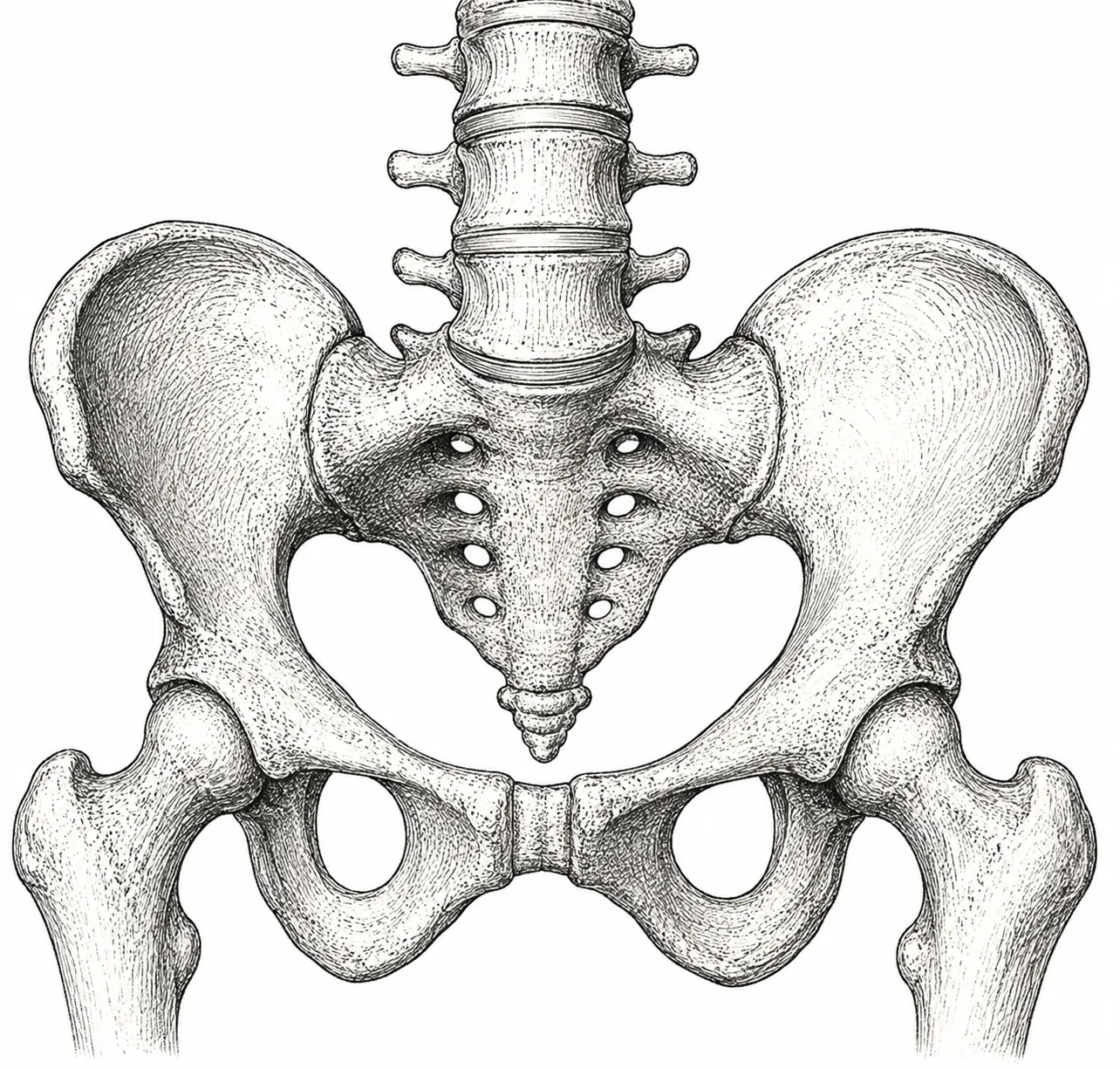
Appeared in: NORCET 3 - 2022 (Shift-1)
Explanation
- The image shows a kyphotic pelvis, characterized by the forward projection of the lumbar spine and sacrum into the pelvic cavity.
- This deformity creates a funnel shape, where the pelvic inlet's anteroposterior diameter is increased, but the pelvic outlet is severely contracted.
- This condition is a direct result of kyphosis (hunchback) of the spine, which alters the pelvic architecture.
- During labor, this can cause the fetal head to become arrested at the outlet, despite engaging easily in the inlet.
Why Other Options Were Wrong
- Option B: An osteomalacic pelvis, caused by bone softening from conditions like rickets, results in a triradiate or heart-shaped pelvic brim due to the inward pressure on the acetabula and sacrum. The image does not show this characteristic shape.
- Option C: Naegele's pelvis is an obliquely contracted pelvis caused by the congenital absence or underdevelopment of one sacral ala. This results in a distinctly asymmetrical pelvic inlet, which is not the feature shown in the image.
- Option D: Robert's pelvis is a rare and severe deformity characterized by the absence of both sacral alae. This leads to extreme transverse contraction of the pelvis, making the brim appear almost triangular. The image shows a funnel shape, not a transversely contracted one.
Related Visual

Clinical Relevance
- Nursing practice connection: This is primarily an exam-oriented knowledge point with limited direct bedside application, so retain Identification of abnormal pelvic types based on anatomical deformities as background academic context rather than a clinical decision trigger.
- Recognizing a kyphotic pelvis is critical for antenatal planning. It is a major cause of obstructed labor at the pelvic outlet.
- A nurse assisting in labor should be aware that with a kyphotic pelvis, good progress in the first stage of labor can be misleading, as the real challenge occurs at the outlet.
- What if? If the fetus was small for gestational age, vaginal delivery might be possible despite the contracted outlet. However, with an average or large-sized fetus, an elective or emergency cesarean section is the most likely and safest mode of delivery.
How to Approach the Question
- First, carefully examine the image to identify the primary anatomical abnormality. Notice the severe forward curvature of the lower spine into the pelvic space.
- Relate this spinal deformity to its effect on the pelvic structure. The forward projection of the sacrum creates a funnel shape, widening the inlet's front-to-back dimension while narrowing the outlet.
- Recall the definitions of different types of abnormal pelves. A kyphotic pelvis is specifically defined by this funnel shape caused by spinal kyphosis.
- Compare the observed features with the characteristics of the other options. Rule out Naegele's (asymmetry), Robert's (transverse contraction), and Osteomalacic (triradiate brim) as they do not match the visual evidence.
- Select the option that directly corresponds to the identified deformity.
Concept Tested & Keywords
- Concept Tested: Identification of abnormal pelvic types based on anatomical deformities.
- Stem keywords: abnormal pelvis, identify
- Lead-in keywords: Identify
- Clinical cues: The image shows a pronounced forward curvature of the lumbar spine projecting into the pelvic inlet, which is the defining feature of a kyphotic pelvis.
Question ID
QGgk9SLH3yioZxbTh8C0V5
Reference Book
E6 Midwifery Obstetrics and Gynecology Nursing Sandeep Kaur p. 50-60
E6 Nelson Textbook of Pediatrics(2024) — Volume 2 p. 2060-2062
Practise the full NORCET 3 - 2022 (Shift-1)
Attempt every question from this paper in a timed mock, then review the full solution for each one.
More Contracted Pelvis Questions
- The type of pelvis in which the features are a heart-shaped brim, narrow pelvis, and sciatic notch with prominent ischial spines and a suprapubic ang…
- The shape of the brim in anthropoid pelvis is?
- The most common cause of non-engagement at term in primigravida is?
- Which of the following is a heart-shaped pelvis?
- Commonest cause of non engagement at term, in a primigravida is?
- Which pelvic shape has the poorest prognosis for vaginal delivery?
- Disparity in relation between the fetal head and maternal pelvis is called?
- Which one of the following is not a described type of female bony pelvis?
- The type of pelvis most favorable for normal vaginal delivery is?
- Which type of pelvis is commonest and ideal for childbearing?
More NORCET 3 - 2022 (Shift-1) Questions
- A patient is getting IV fluid through peripheral cannula, shows redness, cool, oedema and decreased flow rate. The possible diagnosis is?
- The Endemic Disease that occurs every 4 years of interval is called?
- The nurse witnesses a neighbour's husband sustain a fall from the roof of his house. The nurse rushes to the victim and determines the need to open t…
- In a patient IV site shows redness, heat, tenderness, decrease flow rate, are the classical sign of?
- Which measure is used for growth monitoring at Anganwadi centre?
- Which of the following muscles should always be avoided for IM Injection to prevent sciatic nerve injury?
- The doses of Elemental Iron and folic acid in Anaemia Mukht Bharat (AMB) program for pregnant women?
- A child is suffering from diarrhoea with restlessness, agitation and irritability. Which of the following clinical sign is not indicating to severe d…
- A 45 year female client with clinical manifestation of worthlessness, hopelessness, and not involved in her family activities and she is not eating f…
- A 7-year-old child is brought to the ER at midnight by his mother after symptoms appeared abruptly. The nurse's initial assessment reveals a temperat…