
AIIMS Delhi NO - 2018
Medical & Surgical Nursing
Easy
Which stage of bed sore is shown here?
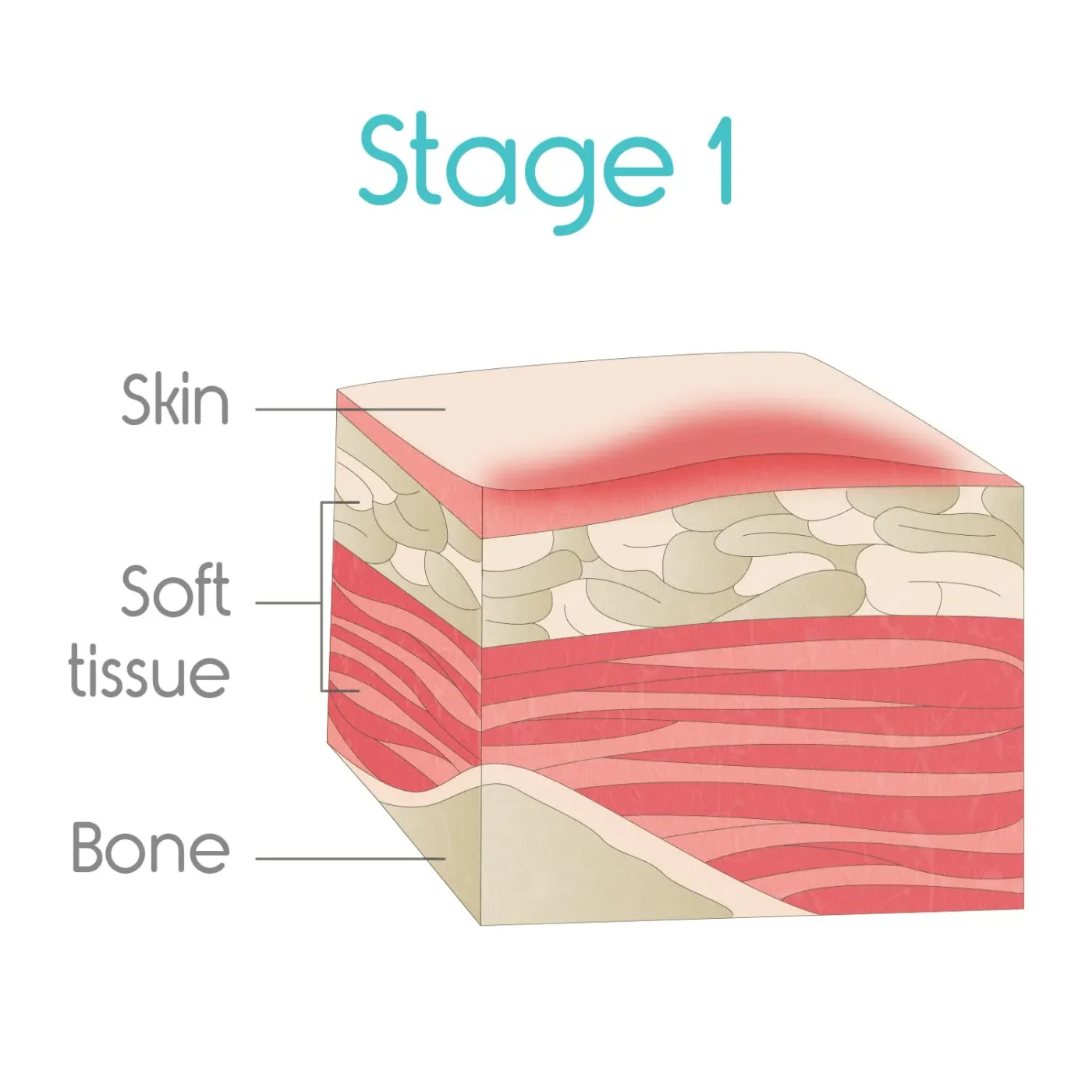
Appeared in: AIIMS Delhi NO - 2018
Explanation
- The image displays a Stage 2 pressure injury.
- This stage is defined by partial-thickness loss of the dermis, presenting as a shallow open ulcer with a red-pink, moist wound bed.
- It can also appear as an intact or ruptured serum-filled blister.
- In the given image, the skin is broken, and a shallow ulcer is visible, which are hallmark signs of a Stage 2 injury.
- Deeper tissues like fat, muscle, or bone are not visible.
Why Other Options Were Wrong
- Option A: Grade-1 (Stage 1) pressure injuries involve intact skin with non-blanchable redness. The image clearly shows broken skin and an open ulcer, which rules out Stage 1.
- Option C: Grade-3 (Stage 3) involves full-thickness skin loss where subcutaneous fat is visible. The wound in the image is shallow and does not extend into the fat layer.
- Option D: Grade-4 (Stage 4) is the most severe, involving full-thickness skin and tissue loss with exposed bone, muscle, or tendon. The wound in the image is superficial and does not show any of these deep structures.
Related Visual

Clinical Relevance
- Nursing practice connection: This is primarily an exam-oriented knowledge point with limited direct bedside application, so retain Staging of pressure ulcers (bedsores) based on visual assessment as background academic context rather than a clinical decision trigger.
- Accurate staging of pressure injuries is crucial for determining the appropriate treatment plan, including dressing selection and pressure-relieving interventions.
- Early identification and intervention for Stage 1 and 2 injuries can prevent progression to more severe, harder-to-treat wounds, reducing patient morbidity and healthcare costs.
- Nurses play a key role in preventing pressure injuries by conducting regular skin assessments (especially over bony prominences), ensuring adequate nutrition and hydration, and repositioning at-risk patients frequently (e.g., every 2 hours).
How to Approach the Question
- First, carefully examine the image provided, paying close attention to the characteristics of the wound.
- Identify the key features: Is the skin intact or broken? What is the color of the wound bed? How deep does the wound appear to be?
- Note that the skin is broken, forming a shallow ulcer with a pink-red base. This indicates partial-thickness skin loss.
- Recall the definitions of the four main stages of pressure injuries.
- Compare the observed features with the staging criteria. Stage 1 has intact skin. Stage 2 has partial-thickness loss. Stage 3 has full-thickness loss with visible fat. Stage 4 has exposed bone/muscle.
- Conclude that the features in the image (shallow ulcer, partial-thickness loss) perfectly match the description of a Stage 2 pressure injury.
Concept Tested & Keywords
- Concept Tested: Staging of pressure ulcers (bedsores) based on visual assessment.
- Stem keywords: bed sore, stage, pressure injury
- Lead-in keywords: Which stage
- Clinical cues: Image shows a shallow open ulcer with a red-pink wound bed, indicating partial-thickness skin loss.
Question ID
QMli9O8GlPcR8hH23ZVa7g
Reference Book
E6 Nursing Fundamentals Potter Perry 12e Part 6 p. 69-71
E6 Nursing Fundamentals Taylor pp. 560-562, 581-583
Practise the full AIIMS Delhi NO - 2018
Attempt every question from this paper in a timed mock, then review the full solution for each one.
More Integumentary Function Questions
- This type of dressing is known as:
- The following picture shows is bedsore present in bedridden patient. Which grade of bedsore is present?
- In second degree bedsore, there is an involvement of:
- What is the bath used to remove the irritation of certain types of skin diseases and provide soothing effect?
- A female patient has come with facial burn injury into the emergency department in conscious condition. What will be the treatment for this patient?
- A patient comes into the emergency with a burn injury of 40% then what is first nursing intervention?
- A nurse caring a bedridden patient with a pressure ulcer, 2 hourly position changes and massaging & rubbing the back but pressure sore does not heal.…
- Second degree burn considered?
- Identify the stage of pressure ulcer
- A 23 year old man comes to the emergency department with thermal burns. In this case according to rule of nine which part of the body burned maximum?
More AIIMS Delhi NO - 2018 Questions
- Another tentative diagnosis made for the client is Wernicke's Encephalopathy. If the client has this, the nurse anticipates that the first physician'…
- A 35-year-old man was in an automobile accident with an admitting diagnosis of a head injury. He has a Glasgow Coma Scale score of 4. Upon MRI and CT…
- A 28-year-old male client is admitted to the hospital for a suspected brain tumor. While assessing this client, the nurse would keep in mind that the…
- Following admission to the hospital, a diagnosis of increasing intracranial pressure was made. The nursing intervention appropriate in the care of th…
- The nurse has orders to administer phenytoin (Dilantin) 100 mg IV as an anticoagulant. The priority action while administering this drug is to:
- The client is to take lithium regularly after she is discharged from the hospital. The nursing care plan includes discharge planning. The most import…
- A patient is taking a proper diet as prescribed for bulimia nervosa, but the patient's weight is not gaining. Which nursing action is appropriate?
- Identify the size of the cannula shown here?& x20;
- Identify the following image? & x20;
- Identify the instrument below?& x20;