
BTSC Staff Nurse 30July-2025
Applied Nutrition & Dietetics
Easy
Which of the following vitamins is primarily essential for the synthesis of collagen?
Appeared in: BTSC Staff Nurse 30July-2025
Explanation
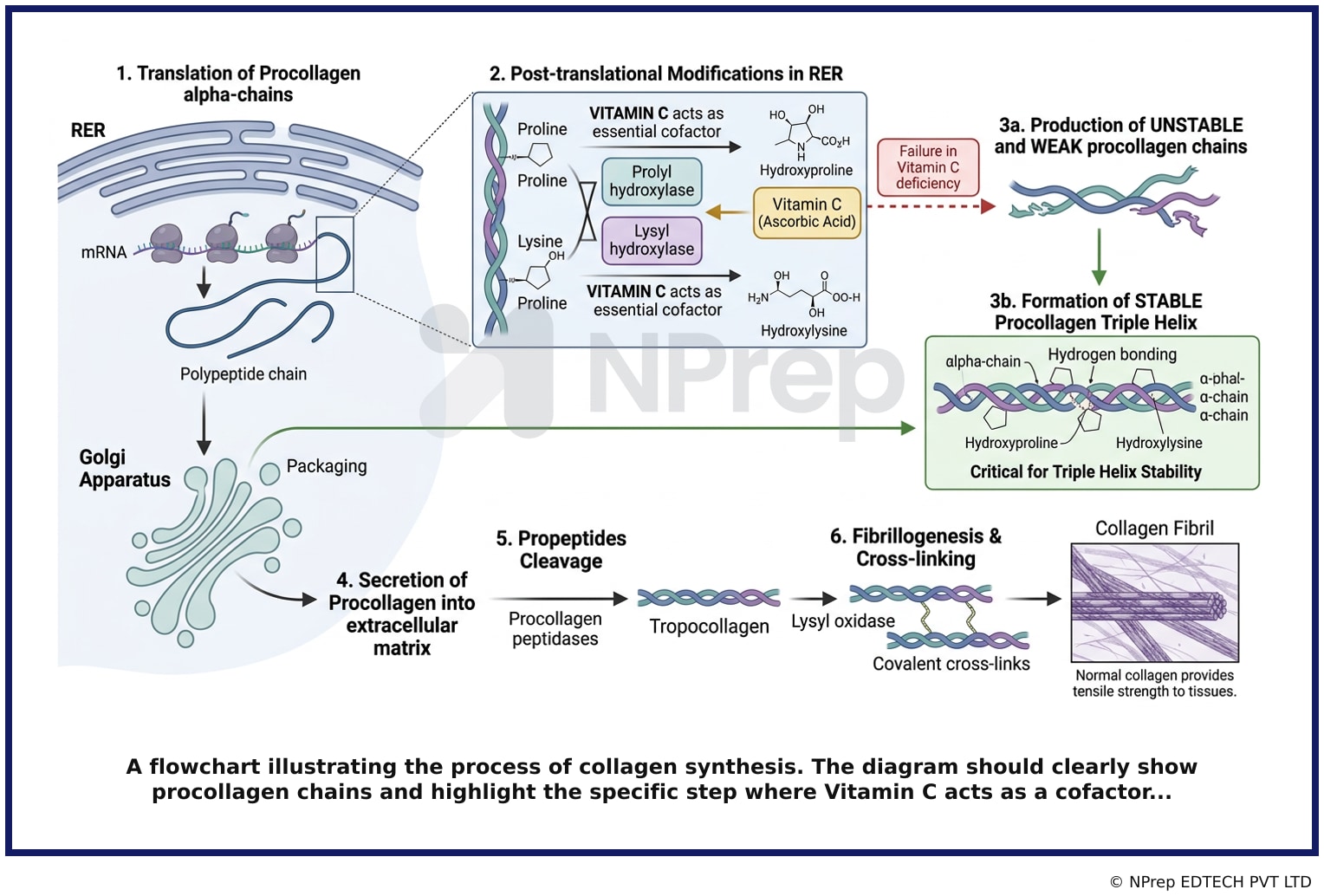
- Vitamin C (ascorbic acid) is an essential cofactor for the enzymes prolyl hydroxylase and lysyl hydroxylase.
- These enzymes catalyze the hydroxylation of proline and lysine residues during the synthesis of procollagen.
- This hydroxylation is a critical post-translational modification that allows for the formation of a stable triple-helix structure, giving collagen its strength.
- A deficiency in Vitamin C leads to the production of weak, unstable collagen, resulting in impaired wound healing and the signs of scurvy.
Why Other Options Were Wrong
- Option B: Vitamin A is a fat-soluble vitamin primarily involved in vision, immune function, and cellular differentiation, not directly in the synthesis of collagen.
- Option C: Vitamin K is a fat-soluble vitamin essential for blood coagulation. It acts as a cofactor for the carboxylation of glutamate residues in clotting factors.
- Option D: Vitamin E is a major lipid-soluble antioxidant that protects cell membranes from oxidative damage. It does not have a primary role in collagen synthesis.
Related Visual
Clinical Relevance
- Nursing practice connection: This is primarily an exam-oriented knowledge point with limited direct bedside application, so retain Biochemical role of vitamins in protein synthesis as background academic context rather than a clinical decision trigger.
- Nurses must assess patients for signs of Vitamin C deficiency, especially those at risk, such as the elderly, individuals with malnutrition, or chronic alcohol users. Key signs include poor wound healing, bleeding gums, and petechiae.
- Patient education should include dietary sources of Vitamin C, such as citrus fruits (oranges, lemons), berries, tomatoes, and green leafy vegetables, to promote adequate intake and support tissue repair.
- In a clinical setting, delayed wound healing in a post-surgical patient should prompt the nurse to consider nutritional deficiencies, including Vitamin C, and advocate for a nutritional assessment and potential supplementation.
How to Approach the Question
- This is a factual recall question that tests your knowledge of the specific biochemical functions of different vitamins.
- First, identify the key process in the question stem: 'synthesis of collagen'.
- Next, systematically review the primary function of each vitamin listed in the options.
- Recall that Vitamin C is directly involved in the enzymatic reactions that stabilize the collagen molecule.
- Eliminate the other options by matching them to their primary roles: Vitamin A for vision, Vitamin K for blood clotting, and Vitamin E as an antioxidant.
- Confirm the link between Vitamin C and collagen to select the correct answer.
Concept Tested & Keywords
- Concept Tested: Biochemical role of vitamins in protein synthesis
- Stem keywords: vitamin, synthesis, collagen
- Lead-in keywords: primarily essential
Question ID
Qk8YK_3mhSH2I_SzQhrb-E
Reference Book
E6 Biochemistry U Satyanarayana— Part 1 (pp 26-420 of 840) pp. 149-151, 150-152
E6 Harper's Illustrated Biochemistry2023 (pp 26-793 of 813) p. 726-727
Practise the full BTSC Staff Nurse 30July-2025
Attempt every question from this paper in a timed mock, then review the full solution for each one.
More Vitamins Questions
- Early sign of Vitamin A deficiency is:
- Which of the following vitamin deficiency causes Bitot's spot and Xerophthalmia?
- Which vitamin does convert prothrombin to thrombin?
- Highest source of vitamin-C?
- Deficiency of which nutrient causes scurvy?
- A nurse is assessing a malnourished adolescent who has been consuming a vegan diet. For signs of which specific vitamin deficiency should the nurse a…
- A child is found to be deficient in iron. To increase the child's absorption of iron, which vitamin should a nurse encourage the parents to supplemen…
- Which one of the following vitamins helps in wound healing?
- Which of the following is precursor of vitamin A?
- Vitamin B1 is also known as?
More BTSC Staff Nurse 30July-2025 Questions
- According to the Staff Inspection Unit (SIU) norms in India, what is the recommended nurse-to-patient ratio for general wards?
- Which of the following is NOT an endocrine function of the pancreas?
- What is the primary goal of using insulin and glucose in the management of hyperkalaemia?
- Which is the main principle of patient education in ambulatory care?
- What is indicated by a T-score of -2.8 on a DEXA scan?
- All of the following are the recommended sites for subcutaneous injections, EXCEPT:
- What is the primary treatment for most cases of acute watery diarrhoea?
- Why is 5% dextrose contraindicated in patients with acute head injury?
- What legally defines nursing as a profession?
- The National Iodine Deficiency Disorders Control Programme (NIDDCP) was previously known as: