
NORCET 1 - 2020
Nursing Foundation
Easy
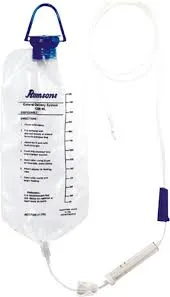
Identify the image to give the answer?
Appeared in: NORCET 1 - 2020
Explanation
- The image shows a bag clearly labeled "Enteral Delivery System," which is a type of feeding bag.
- Enteral nutrition (EN) is used for patients who have a functioning gastrointestinal (GI) tract but are unable to take food orally.
- The bag's features, including volume markings, a hanger, and tubing with a drip chamber and roller clamp, are all characteristic of a gravity-fed enteral feeding system.
- This method is preferred over parenteral nutrition when the GI tract is functional because it is safer, more physiological, and helps maintain gut integrity.
Why Other Options Were Wrong
- Option B: A TPN (Total Parenteral Nutrition) bag is used for intravenous feeding, delivering a sterile, specialized nutrient solution directly into the bloodstream. The bag in the image is explicitly for enteral (gastrointestinal) use.
- Option C: An IV bag contains sterile fluids like normal saline or dextrose solutions for intravenous administration. It would not be labeled "Enteral Delivery System" and has different connector ports.
- Option D: A urine bag is a collection device connected to a urinary catheter to collect urine. It has a completely different design, often with a drainage valve at the bottom, and is not used for administration of any substance.
Related Visual

- Visual 1: Comparison Chart - An infographic comparing the appearance, labels, and connectors of an Enteral Feeding Bag, a TPN Bag, an IV Fluid Bag, and a Urine Bag to highlight key differences.
- Visual 2: Diagram - A diagram showing the setup for enteral tube feeding, from the bag, through the pump (if used), to the nasogastric or gastrostomy tube, illustrating the path into the stomach.
- Visual 3: Photograph - A close-up image of an ENFit® connector, explaining its role in preventing dangerous misconnections between enteral and IV systems.
Clinical Relevance
- Nursing practice connection: This is primarily an exam-oriented knowledge point with limited direct bedside application, so retain Identification of medical equipment for nutritional support as background academic context rather than a clinical decision trigger.
- Patient Safety: The number one clinical priority is to distinguish enteral from parenteral (IV) lines. Administering enteral formula intravenously is a sentinel event that is often fatal. Always trace lines from the source to the patient before connecting or administering anything.
- Aspiration Prevention: A key nursing responsibility during enteral feeding is to prevent aspiration pneumonia. This is achieved by confirming tube placement, keeping the head of the bed elevated (30-45 degrees), and monitoring for signs of intolerance like high gastric residual volumes.
- What if?: What if the patient starts coughing and choking during the feeding? The nurse's first action would be to stop the feeding immediately, assess the patient's respiratory status, and suction if necessary. This could indicate tube displacement or aspiration.
How to Approach the Question
- First, carefully examine the image for any text or labels. The words "Enteral Delivery System" are clearly visible and are the most important clue.
- Next, analyze the components shown: a bag for fluid, tubing, and a clamp. This indicates a system for administering a liquid.
- Consider the term "Enteral." This medical term refers to the gastrointestinal tract. Therefore, the device is for feeding into the stomach or intestines.
- Evaluate the given options based on this analysis. "Feeding bag" is the most appropriate description for a device used for enteral nutrition.
- Eliminate the other options by recalling their functions: TPN is intravenous nutrition, an IV bag is for intravenous fluids, and a urine bag is for collecting urine.
Concept Tested & Keywords
- Concept Tested: Identification of medical equipment for nutritional support.
- Stem keywords: Identify, image
- Lead-in keywords: give the answer
- Clinical cues: The label "Enteral Delivery System" is the key identifier.
Question ID
Qvvou80lRgJhpThibOzjjM
Practise the full NORCET 1 - 2020
Attempt every question from this paper in a timed mock, then review the full solution for each one.
More Nutritional Needs Questions
- A doctor has asked the nurse to insert Ryle's tube and has also mentioned do not perform whoosh test to confirm the placement of the tube" How whoosh…
- Identify the following tube in the image:
- During NG tube feeding, the patient should be placed in?
- After giving nasogastric feed, elevate the head end of 30-60 degrees for at least?
- The reason for contraindication of oral intake is?
- The Extra calories required during pregnancy?
- Enteral feeding is also known as, except?
- The term gavage indicates?
- Difficult swallowing is called?
- A patient is on NPO and receiving TPN via central line. Which of the following thing should assess by the nurse before offering oral fluids?
More NORCET 1 - 2020 Questions
- The relation between the fetal presenting part and maternal pelvis is known as?
- Which vaccine can be frozen?
- Which vaccine, after administration, forms blisters, heals by itself, and forms a permanent scar mark?
- Identify the conjugate measured in the picture?& x20;
- A post LSCS woman passes 400 ml urine in the past 24 hours. This condition is known as?
- Red color urine is caused by which anti-tubercular drug?
- Visualization of bone occurs in which stage of burn?
- The given retractor is used in which of the following surgeries?
- Identify the size of IV Cannula in the image?
- What will you do if you have a needle stick injury from an HIV patient?