
NORCET-11 Prelims
Pathology & Genetics
Medium
The histopathology image reveals a pathognomonic cell with a caterpillar-like nucleus, an Anitschkow cell. In which condition is this characteristic finding seen?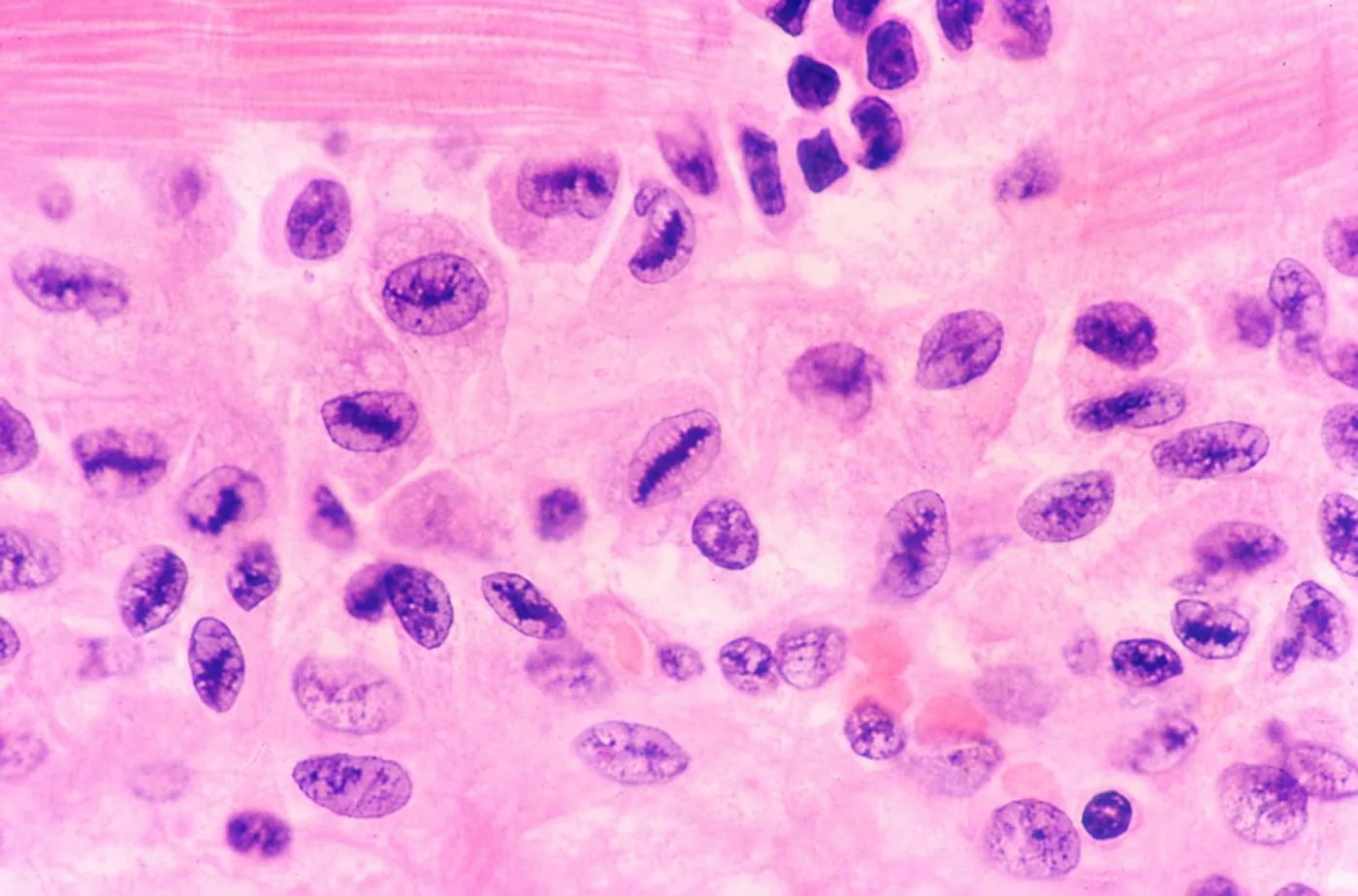
Appeared in: NORCET-11 Prelims
Explanation
- Anitschkow cells are large mononuclear cells with a caterpillar-like nucleus, seen in Aschoff bodies.
- Aschoff bodies are pathognomonic for rheumatic carditis, a manifestation of acute rheumatic fever.
- Acute rheumatic fever typically follows a Group A beta-hemolytic streptococcal pharyngitis after a latent period.
- The presence of these cells confirms rheumatic involvement of the heart.
Why Other Options Were Wrong
- Option A: Viral myocarditis does not show Anitschkow cells or Aschoff bodies. It is characterized by lymphocytic infiltration and myocyte necrosis.
- Option B: Acute myocardial infarction is characterized by coagulative necrosis and neutrophilic infiltration, not Anitschkow cells.
- Option C: Old or healed myocardial infarction shows fibrosis and scar tissue, not Anitschkow cells or Aschoff bodies.
Related Visual

Clinical Relevance
- Nursing practice connection: This is primarily an exam-oriented knowledge point with limited direct bedside application, so retain Identification and clinical significance of Anitschkow cells in cardiac histopathology as background academic context rather than a clinical decision trigger.
- Recognizing Anitschkow cells helps confirm rheumatic carditis, guiding appropriate management and secondary prophylaxis.
- Early identification of rheumatic fever can prevent chronic rheumatic heart disease and valvular damage.
- What if? - If the patient had no history of recent pharyngitis or the cells lacked the caterpillar-like nucleus, another diagnosis (e.g., viral myocarditis) would be considered.
How to Approach the Question
- Carefully observe the histopathology image for unique nuclear features (caterpillar-like chromatin).
- Recall which disease process is pathognomonic for Anitschkow cells (rheumatic fever).
- Match the clinical scenario (recent pharyngitis, Group A strep) to the pathological finding.
- Eliminate options that do not fit the histological or clinical context.
- Use the timeline (2 weeks post-pharyngitis) as a key clue for rheumatic fever.
Concept Tested & Keywords
- Concept Tested: Identification and clinical significance of Anitschkow cells in cardiac histopathology
- Stem keywords: histopathology image, Anitschkow cell, caterpillar-like nucleus, pathognomonic cell
- Lead-in keywords: condition, characteristic finding
- Clinical cues: Pharyngitis 2 weeks ago
- Clinical cues: Group A beta hemolytic streptococcus infection
Question ID
QMA-C076t_ThfPFHVqEteU
Reference Book
E6 Pathology-Textbook of PATHOLOGYHarsh Mohan Part 2 (215-514) pp. 13-15, 14-16
E6 PATHOLOGY QUICK REVIEWBased on Harsh Mohan Textbook of PATHOLOGY p. 193-195
Practise the full NORCET-11 Prelims
Attempt every question from this paper in a timed mock, then review the full solution for each one.
More Systemic Pathology Questions
- The primary granuloma formed in tuberculosis is known as
- A patient has been suffering from gallbladder disease. A cholecystectomy has been performed and after evaluating the gallbladder sample of that Patie…
- Which type of gall stone is related to hemolytic anemia?
- In HIV, the virus cannot be transmitted by?
- Type I hypersensitivity is mediated by?
- An example of type IV hypersensitivity is?
- Cystic fibrosis is an example of?
- Reed-Sternberg cells in nodes are found in?
- Hirschsprung disease is associated with a defect in which of the following developmental processes involving the enteric nervous system?
- A 36-year-old woman presents with secondary amenorrhea. Karyotyping shows 45,XO. What is the most likely diagnosis?
More NORCET-11 Prelims Questions
- What is the capital of Arunachal Pradesh?
- A patient opens his eyes only when periorbital pressure is applied, makes incomprehensible sounds, and shows abnormal flexion to painful stimulus. Wh…
- Select the correctly spelt word from the options given below.
- Select the correctly spelt word from the options given below.
- Convert a patient's HbA1c value of 7% into estimated average glucose in mg/dL.
- A patient's recorded blood pressure is 150/90 mmHg. What is the calculated Mean Arterial Pressure?
- Identify the ECG pattern shown in the image below.
- At 36 weeks of pregnancy, a woman presents for an antenatal visit with suspected rupture of membranes. A Nitrazine paper test is conducted to differe…
- What is the official currency of Iran?
- Which of the following conditions is caused by a protozoan parasite?