
AIIMS Delhi NO - 2018
Medical Surgical Nursing
Easy
Identify the Red colored waveform in below denote picture?
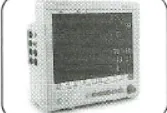
Appeared in: AIIMS Delhi NO - 2018
Explanation
- On a standard multi-parameter patient monitor, waveforms are color-coded for quick identification.
- The red color is universally assigned to represent Invasive Blood Pressure (IBP), also known as Arterial Blood Pressure (ABP).
- The IBP waveform provides a continuous, beat-to-beat display of a patient's blood pressure via an indwelling arterial catheter.
- This waveform is characterized by a rapid upstroke, a peak systolic pressure, a dicrotic notch (representing aortic valve closure), and a diastolic pressure.
Why Other Options Were Wrong
- Option B: NIBP (Non-Invasive Blood Pressure) is measured intermittently with a cuff and does not produce a continuous waveform on the monitor; it only displays numerical values.
- Option C: Pulse Rate is a numerical value (beats per minute), not a waveform. It is typically derived from the ECG (green waveform) or the SpO₂ (blue waveform).
- Option D: The waveform associated with Oxygen Saturation (the plethysmograph) is standardly color-coded as blue or cyan, not red.
Related Visual

Clinical Relevance
- Nursing practice connection: This is primarily an exam-oriented knowledge point with limited direct bedside application, so retain Standard color-coding of waveforms on a multi-parameter patient monitor as background academic context rather than a clinical decision trigger.
- Rapidly identifying waveforms by color is a critical skill for nurses in acute and critical care settings, enabling quick assessment of a patient's status, especially during emergencies.
- Misinterpretation of waveforms can lead to delayed or incorrect interventions. For example, confusing a dampened IBP waveform with a low NIBP reading could have serious consequences.
- What if? If a patient's red (IBP) waveform suddenly becomes flat ('dampened'), the nurse's first action should be to check the patient and the monitoring system (e.g., catheter position, tubing for kinks or air bubbles, transducer level) rather than immediately treating for hypotension, as it is often a technical issue.
How to Approach the Question
- First, identify the core question, which is to identify a specific colored waveform on a patient monitor.
- Recognize that this is an image-based question that relies on recall of standard medical conventions rather than direct interpretation of the grainy image.
- Access your knowledge base about the standard color-coding used in multi-parameter monitors.
- Systematically evaluate each option against the standard color convention: Red = IBP, Green = ECG, Blue = SpO₂, Yellow/White = Respiration.
- Eliminate the incorrect options by identifying what they represent: NIBP (no waveform), Pulse Rate (a number), and Oxygen Saturation (blue/cyan waveform).
- Confirm that the remaining option (IBP) matches the color specified in the question (Red).
Concept Tested & Keywords
- Concept Tested: Standard color-coding of waveforms on a multi-parameter patient monitor.
- Stem keywords: patient monitor, waveform, Red colored
- Lead-in keywords: Identify
- Negative lead-in flag: false
Question ID
QKRt1kTgoUaBvFm4J7_1E1
Reference Book
E6 Medicine Davidson Principles Practice 24e p. 195-197
E6 Nursing Vital Signs p. 66-68
E6 Nelson Textbook of Pediatrics(2024) — Volume 1 p. 661-663
Practise the full AIIMS Delhi NO - 2018
Attempt every question from this paper in a timed mock, then review the full solution for each one.
More Hemodynamic Monitoring Questions
- Identify the red wave forms in the following image:
- A 21-year-old woman is being treated for injuries sustained in an automobile accident. The patient has a central venous pressure (CVP) line in place.…
- What is the cerebral perfusion pressure if blood pressure is 90/60 mm Hg and ICP is 18 mm Hg?
- A nurse is monitoring manometer for CVP value from a central line inserted via the brachial vein. CVP line inserted in a patient in ICU on face mask…
- Identify the red-colored waveform in the picture below?& x20;
- Identify the instrument shown in the following image?& x20;
- Identify the following device?
- The normal range of CVP is?
- Normal CVP is?
- While doing CVP calibration, zeroing of the manometer should be done at which of the following levels?
More AIIMS Delhi NO - 2018 Questions
- Another tentative diagnosis made for the client is Wernicke's Encephalopathy. If the client has this, the nurse anticipates that the first physician'…
- A 35-year-old man was in an automobile accident with an admitting diagnosis of a head injury. He has a Glasgow Coma Scale score of 4. Upon MRI and CT…
- A 28-year-old male client is admitted to the hospital for a suspected brain tumor. While assessing this client, the nurse would keep in mind that the…
- Following admission to the hospital, a diagnosis of increasing intracranial pressure was made. The nursing intervention appropriate in the care of th…
- The nurse has orders to administer phenytoin (Dilantin) 100 mg IV as an anticoagulant. The priority action while administering this drug is to:
- The most appropriate nursing action for a depressed patient who does not want to join a group is to:
- The client is to take lithium regularly after she is discharged from the hospital. The nursing care plan includes discharge planning. The most import…
- A patient is taking a proper diet as prescribed for bulimia nervosa, but the patient's weight is not gaining. Which nursing action is appropriate?
- Identify the size of the cannula shown here?& x20;
- Identify the following image? & x20;