
AIIMS Rishikesh NO - 2019
Medical Surgical Nursing
Easy
Identify the following tube?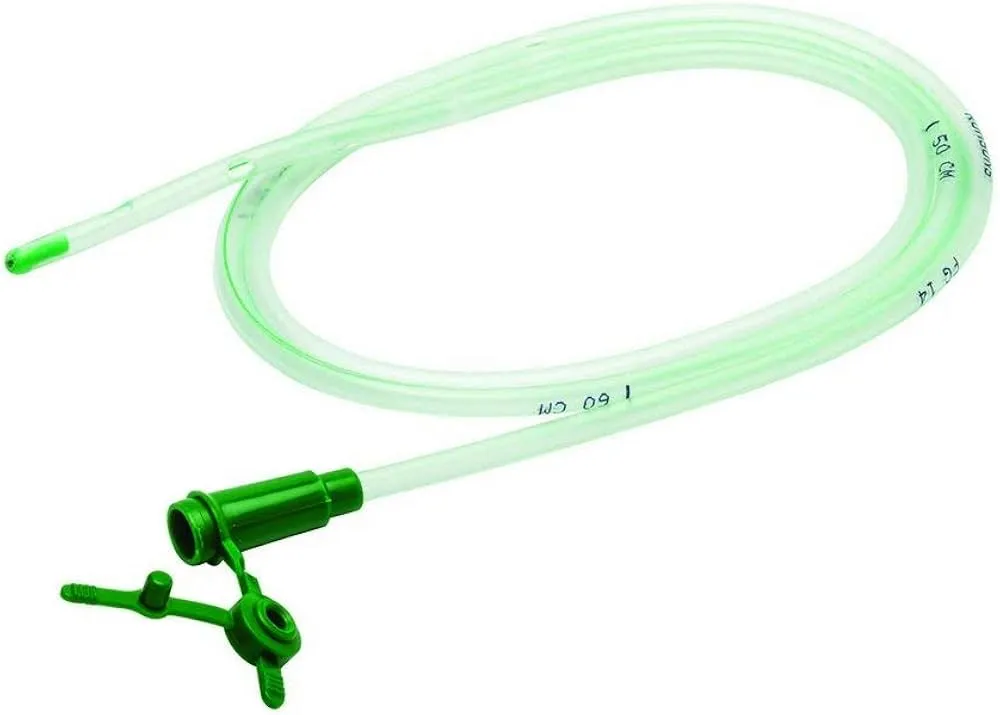
Appeared in: AIIMS Rishikesh NO - 2019
Explanation
- The image displays a Ryle's tube, a specific type of single-lumen nasogastric (NG) tube.
- It is primarily used for short-term purposes such as enteral feeding (gastric gavage), administering medications, or gastric decompression.
- Key visual identifiers matching the image include the flexible, single-lumen design, measurement markings for insertion depth (50 cm, 60 cm), a size indicator (FG 14), a closed distal tip with side ports, and a proximal funnel connector with a cap.
Why Other Options Were Wrong
- Option B: A Miller tube (or Miller-Abbott tube) is an intestinal tube, not a gastric tube. It is longer and has a weighted balloon at its tip to help it pass through the pylorus into the small intestine.
- Option C: While a Ryle's tube is a type of nasogastric (NG) tube, 'NG Tube' is a general classification. In identification questions, the most specific and accurate answer is preferred. The features shown allow for the specific identification as a Ryle's tube.
- Option D: A suction catheter is designed to remove secretions from the respiratory tract (e.g., trachea, bronchi), not for gastric access. It is typically shorter and has a different proximal connector, often with a thumb valve to control suction.
Related Visual

Clinical Relevance
- Nursing practice connection: This is primarily an exam-oriented knowledge point with limited direct bedside application, so retain Identification of common medical tubes as background academic context rather than a clinical decision trigger.
- Confirming placement is the most critical nursing responsibility before using the tube. The gold standard is a chest/abdominal X-ray. Bedside methods include aspirating gastric contents and testing the pH (should be acidic, with a pH less than 5.5).
- Regular flushing (e.g., with 30 mL of water every 4 hours during continuous feeds, and before/after intermittent feeds/meds) is essential to maintain patency and prevent clogging.
- Nurses must provide regular nasal and oral hygiene to prevent discomfort, skin breakdown at the nares, and oral infections, as the tube can cause irritation and mouth breathing.
How to Approach the Question
- This is an image-based identification question, which requires visual recognition of medical equipment.
- First, carefully examine the image provided. Note the key characteristics of the tube: its length, flexibility, color, and any visible markings or parts.
- Identify specific features: a single channel (lumen), measurement marks in centimeters, a size marking (FG 14), a closed tip with side holes, and a funnel-shaped connector with a cap.
- Consider the function implied by these features. The length and markings suggest it is inserted into the body to a specific depth, and the lumen is for instilling or removing fluid/gas.
- Evaluate the given options against your observations. A 'Miller tube' has a balloon tip. A 'Suction Catheter' is for the airway and has a different connector. 'NG Tube' is a general term.
- Select 'Ryle's Tube' because it is the most specific and accurate name for the single-lumen nasogastric tube shown, which is widely used for feeding and decompression.
Concept Tested & Keywords
- Concept Tested: Identification of common medical tubes
- Stem keywords: Identify, tube
- Lead-in keywords: Identify
Question ID
QpHeyuyS3bB_qy5_x_XeWF
Reference Book
E6 Nursing Brunner Adult Health 3SA Vol 1 Part 2 p. 89-91
E6 Nursing Fundamentals Potter Perry 12e Part 6 p. 43-45
Practise the full AIIMS Rishikesh NO - 2019
Attempt every question from this paper in a timed mock, then review the full solution for each one.
More Medical & Surgical Images Questions
More AIIMS Rishikesh NO - 2019 Questions
- Identify the following instrument?& x20;
- Which procedure is being performed in the following image?
- Identify the following instrument?
- Prolonged nasogastric suctioning may cause?
- Which position is given to a child after lumbar Puncture?
- What are the urine specific gravity and color of urine in a 6-year-old child?
- Dengue fever is caused by which mosquito?
- What is the maximum dose of an Intramuscular injection?
- Aspirin can be given with which fluid?
- What are the ECG changes in Hyperkalemia?