
NORCET-11 Prelims
Child Health Nursing (Pediatrics)
Medium
Identify the condition shown in the X-ray?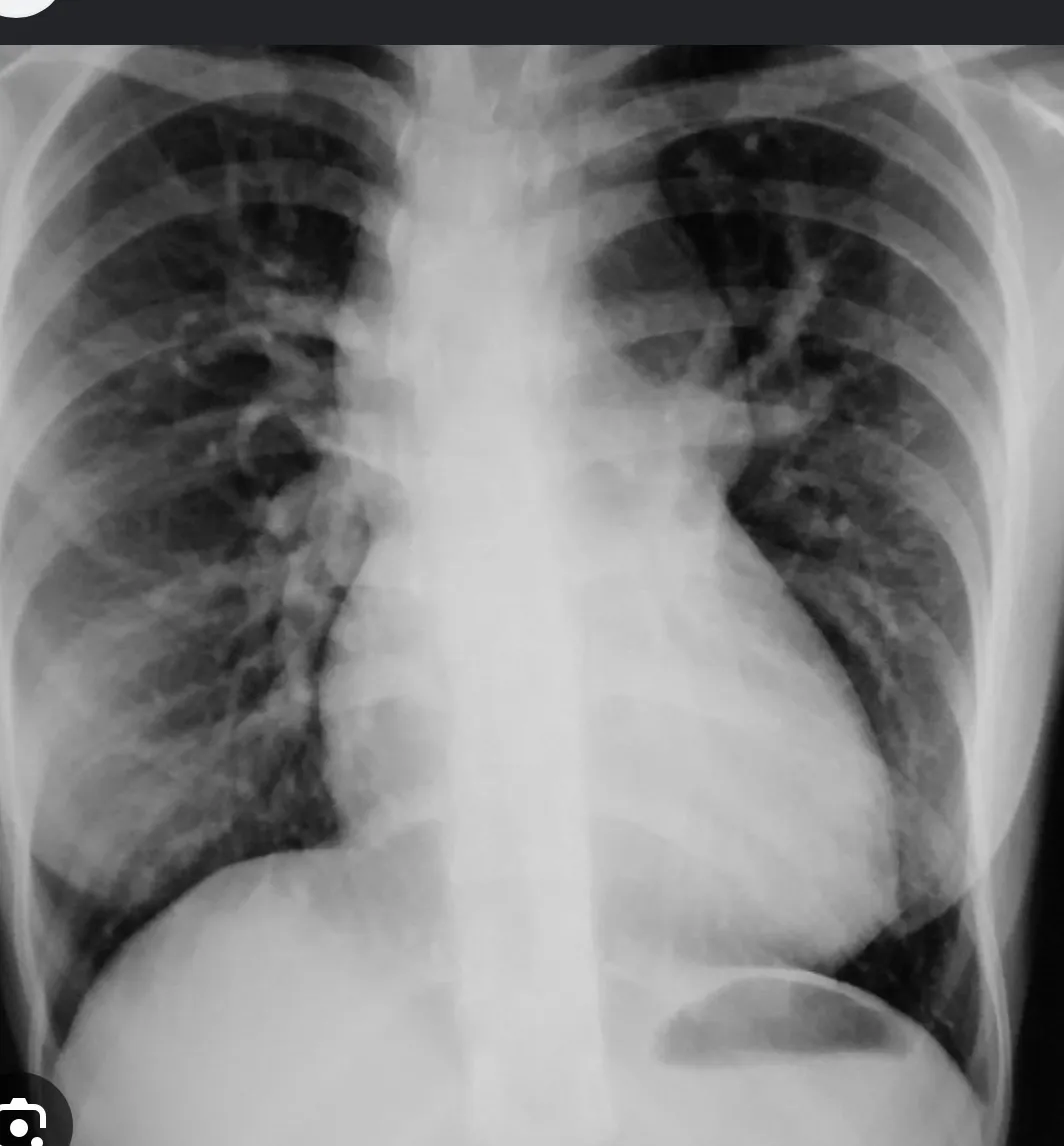
Appeared in: NORCET-11 Prelims
Explanation
- The 'snowman' or 'figure-of-eight' sign on chest X-ray is classic for supracardiac TAPVR.
- This appearance is due to a large supracardiac shadow above the heart (vertical vein and innominate vein) and the normal cardiac shadow below.
- In supracardiac TAPVR, pulmonary veins drain into a vertical vein, then into the innominate vein and SVC, bypassing the left atrium.
- Other cyanotic heart diseases do not produce this radiological sign.
- Diagnosis is confirmed by echocardiography, but the X-ray finding is highly suggestive.
Why Other Options Were Wrong
- Option A: Ebstein anomaly does not produce a snowman or figure-of-eight appearance on X-ray. It is characterized by an enlarged right atrium and a small right ventricle, sometimes described as a 'box-shaped' heart.
- Option B: Tetralogy of Fallot typically shows a 'boot-shaped' heart (coeur en sabot) on X-ray due to right ventricular hypertrophy and upturned apex, not a snowman appearance.
- Option D: Tricuspid atresia does not produce a snowman sign. X-ray may show decreased pulmonary vascularity and a small or normal-sized heart, depending on associated defects.
Related Visual

Clinical Relevance
- Nursing practice connection: This is primarily an exam-oriented knowledge point with limited direct bedside application, so retain Radiological identification of congenital heart disease (TAPVR) using classic X-ray signs as background academic context rather than a clinical decision trigger.
- Recognizing the snowman sign on X-ray allows early suspicion and diagnosis of supracardiac TAPVR, which is a surgical emergency if obstructed.
- Nurses should monitor for signs of cyanosis and respiratory distress in infants with suspected congenital heart disease.
- What if? If the X-ray showed a boot-shaped heart instead, Tetralogy of Fallot would be the likely diagnosis, changing the management approach.
How to Approach the Question
- Carefully observe the X-ray for classic shapes or silhouettes (e.g., snowman, boot, box).
- Recall which congenital heart diseases are associated with specific radiological signs.
- Eliminate options that do not match the described or visible X-ray features.
- Use knowledge of pathophysiology to connect abnormal drainage patterns to radiological findings.
- Confirm the answer with supporting clinical features if provided.
Concept Tested & Keywords
- Concept Tested: Radiological identification of congenital heart disease (TAPVR) using classic X-ray signs
- Stem keywords: X-ray, condition identification, congenital heart disease
- Lead-in keywords: Identify
- Clinical cues: snowman or figure-of-eight appearance on X-ray
Question ID
QIfEdjrSNyrCeD-xjkeDkb
Reference Book
E6 Nelson Textbook of Pediatrics(2024) — Volume 2 p. 606-608
Practise the full NORCET-11 Prelims
Attempt every question from this paper in a timed mock, then review the full solution for each one.
More Disorders of Cardiovascular System Questions
- The type of cyanosis seen in PDA is:
- In which disease condition a boot shaped heart is seen in chest X-ray?
- Which of the following is a congenital malformation of the heart?
- Which of the following is NOT a part of the Tetralogy of Fallot (TOF)?
- The congenital heart disease in which radiographic findings depict boot-shaped heart is called?
- Which of the following is the hypertensive Blood Pressure of a 6-year-old child?
- Common position in a child with tetralogy of Fallot?
- Which of the following is a cyanotic heart disease?
- A child is admitted to the pediatric ward with suspected rheumatic arthritis. What should be an important question that a nurse should ask the parent…
- A 1-month-old boy presents with failure to thrive. On examination, he shows features of congestive heart failure. The femoral pulses are feeble as co…
More NORCET-11 Prelims Questions
- What is the capital of Arunachal Pradesh?
- A patient opens his eyes only when periorbital pressure is applied, makes incomprehensible sounds, and shows abnormal flexion to painful stimulus. Wh…
- Select the correctly spelt word from the options given below.
- Select the correctly spelt word from the options given below.
- Convert a patient's HbA1c value of 7% into estimated average glucose in mg/dL.
- A patient's recorded blood pressure is 150/90 mmHg. What is the calculated Mean Arterial Pressure?
- Identify the ECG pattern shown in the image below.
- At 36 weeks of pregnancy, a woman presents for an antenatal visit with suspected rupture of membranes. A Nitrazine paper test is conducted to differe…
- What is the official currency of Iran?
- Which of the following conditions is caused by a protozoan parasite?