
NORCET-11 Prelims
Easy
An adult patient presents with acute pain in the groin area and a known history of hernia. Which type of hernia does this presentation most strongly suggest?
Appeared in: NORCET-11 Prelims
Explanation
- Inguinal hernia is the most common hernia type in the groin area.
- Presents as pain or bulge in the inguinal region, especially with increased intraabdominal pressure.
- Other hernia types do not typically present with groin pain.
Why Other Options Were Wrong
- Option B: Diaphragmatic hernias present with respiratory or upper abdominal symptoms, not groin pain.
- Option C: Hiatal hernias cause upper abdominal or chest symptoms, not groin pain.
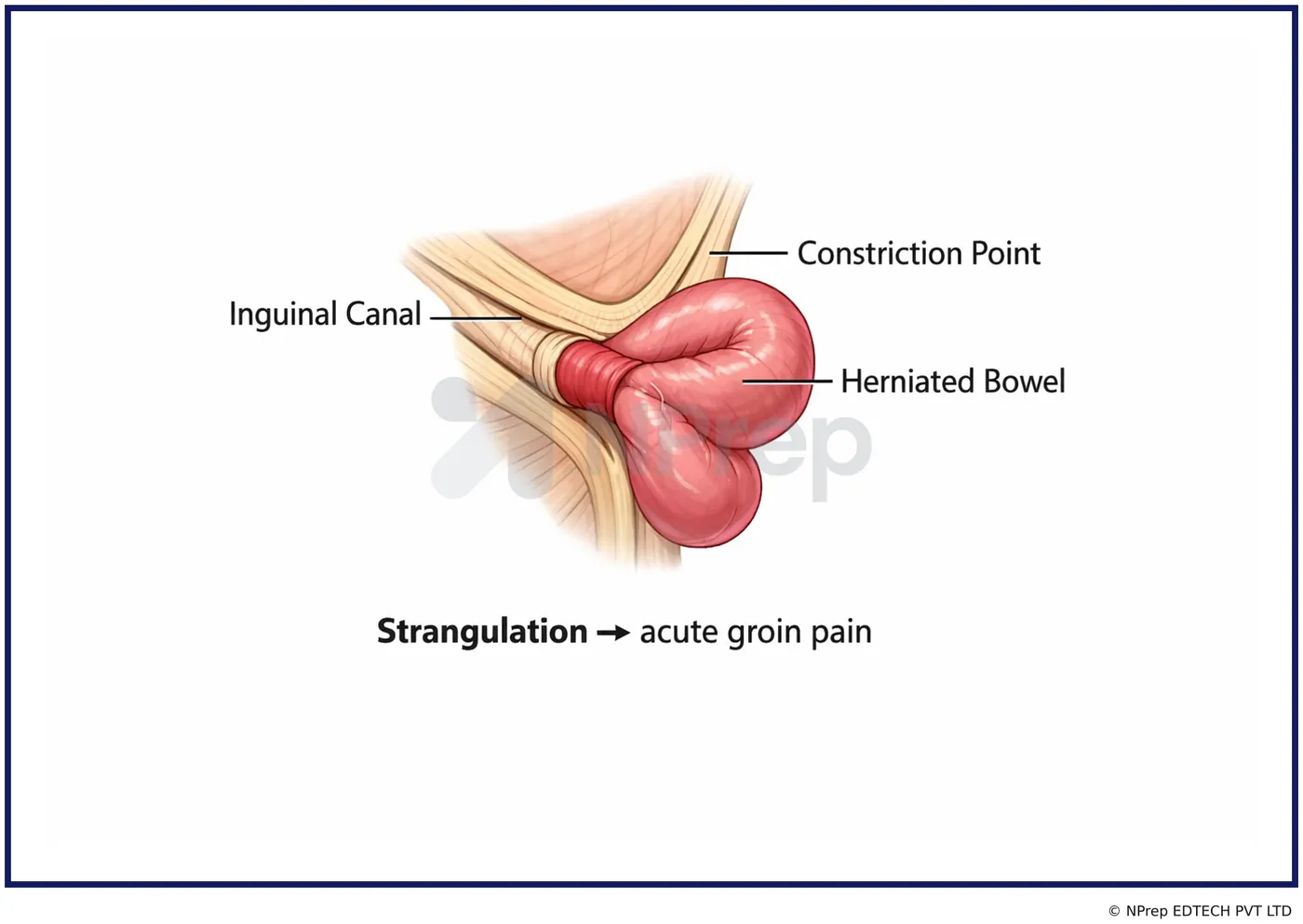
- Option D: Strangulated hernia is a complication of any hernia type, not a specific anatomical type.
Related Visual
Clinical Relevance
- Nursing practice connection: Use the key finding related to Identification of hernia type based on anatomical location and clinical presentation to guide bedside assessment, documentation, and the next nursing action.
- Nurses should recognize that groin pain in a patient with hernia history is most likely due to inguinal hernia, enabling prompt assessment and referral.
- Early identification prevents complications like incarceration or strangulation.
- What if? If the patient had upper abdominal or chest pain instead of groin pain, hiatal or diaphragmatic hernia would be considered.
How to Approach the Question
- Identify the anatomical location mentioned in the stem (groin area).
- Recall which hernia types commonly present in that location.
- Exclude options that do not match the anatomical site (e.g., diaphragmatic, hiatal).
- Recognize that 'strangulated' describes a complication, not a location/type.
- Select the hernia type that matches the clinical and anatomical clues.
Concept Tested & Keywords
- Concept Tested: Identification of hernia type based on anatomical location and clinical presentation
- Stem keywords: adult patient, acute pain, groin area, history of hernia
- Lead-in keywords: most strongly suggest
- Clinical cues: groin pain indicates inguinal region involvement
Question ID
QZMfgxATpv2pd7omO851gy
Reference Book
E6 Nelson Textbook of Pediatrics(2024) — Volume 2 p. 200-202
Practise the full NORCET-11 Prelims
Attempt every question from this paper in a timed mock, then review the full solution for each one.
More NORCET-11 Prelims Questions
- What is the capital of Arunachal Pradesh?
- A patient opens his eyes only when periorbital pressure is applied, makes incomprehensible sounds, and shows abnormal flexion to painful stimulus. Wh…
- Select the correctly spelt word from the options given below.
- Select the correctly spelt word from the options given below.
- Convert a patient's HbA1c value of 7% into estimated average glucose in mg/dL.
- A patient's recorded blood pressure is 150/90 mmHg. What is the calculated Mean Arterial Pressure?
- Identify the ECG pattern shown in the image below.
- At 36 weeks of pregnancy, a woman presents for an antenatal visit with suspected rupture of membranes. A Nitrazine paper test is conducted to differe…
- What is the official currency of Iran?
- Which of the following conditions is caused by a protozoan parasite?