
RML MAINS 2025
Obstetrics & Gynaecology
Hard
A woman has delivered her baby, but the placenta has not expelled within the expected time. What should be the nurse’s immediate intervention?
Appeared in: RML MAINS 2025
Explanation
- A placenta that has not been expelled within the expected time (usually 30 minutes) is termed a 'retained placenta'.
- This condition is a major risk factor for postpartum hemorrhage (PPH) because the uterus cannot contract effectively to close off the blood vessels at the placental site.
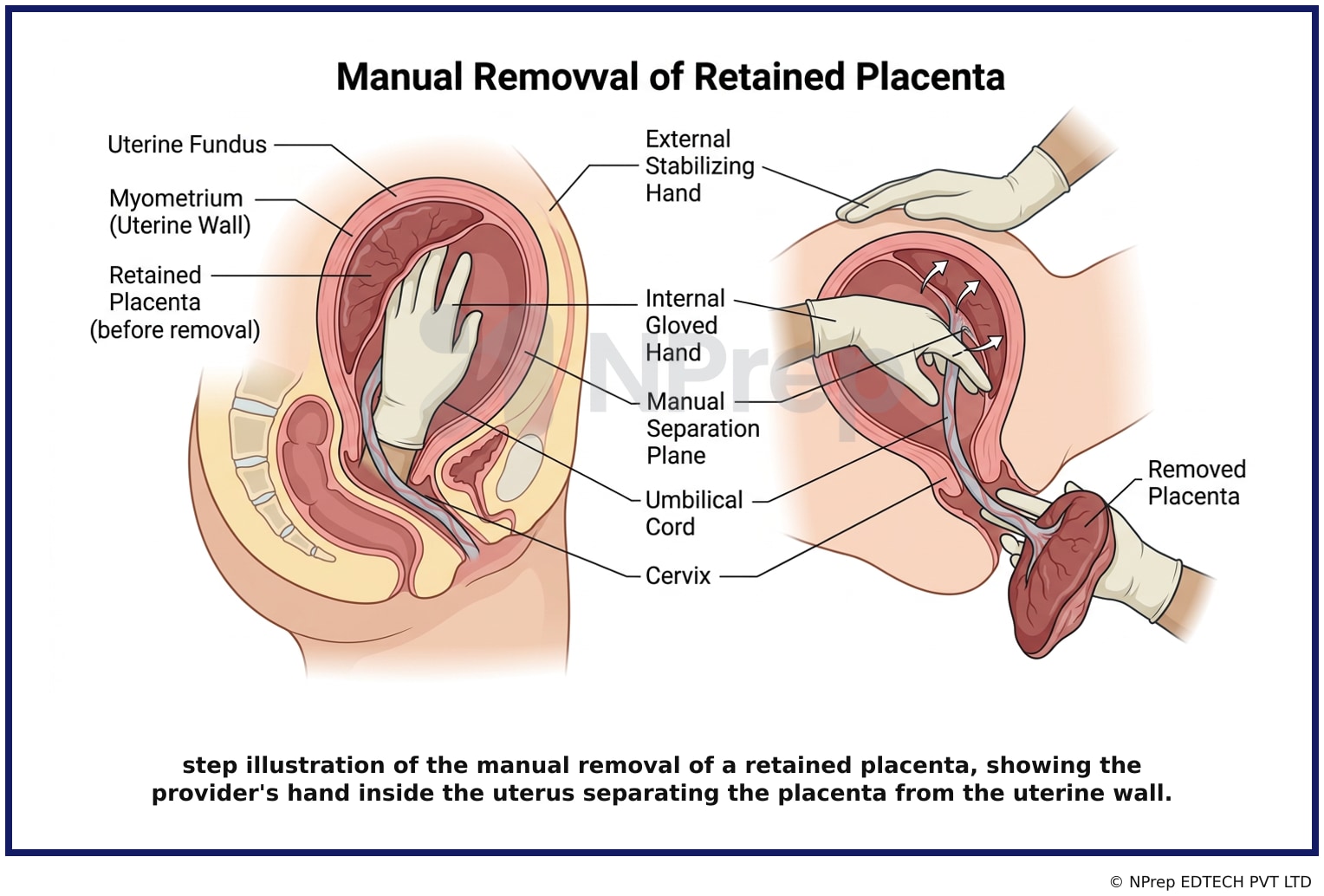
- The definitive treatment for a retained placenta is manual removal by a physician or other qualified provider.
- Therefore, the nurse's most critical and immediate action is to recognize the problem, inform the doctor, and prepare for the manual removal procedure to prevent life-threatening hemorrhage.
Why Other Options Were Wrong
- Option A: While breastfeeding stimulates natural oxytocin release, which aids uterine contractions, it is a supportive measure and not a sufficient or immediate intervention for a diagnosed retained placenta. Relying on this alone delays definitive treatment.
- Option C: Administering oxytocin is part of the management, but simply administering it and waiting is an incomplete and unsafe action. The primary step is to prepare for manual removal, as waiting increases the risk of severe hemorrhage.
- Option D: This action constitutes negligence. A retained placenta is a high-risk situation for sudden, massive hemorrhage. While monitoring vital signs is crucial, leaving the patient to rest without escalating care and preparing for intervention is extremely dangerous.
Related Visual
Clinical Relevance
- Nursing practice connection: Use the key finding related to Management of the third stage of labor and its complications, specifically retained placenta to guide bedside assessment, documentation, and the next nursing action.
- Postpartum hemorrhage (PPH) is a leading cause of maternal mortality worldwide. Prompt recognition and management of its causes, like retained placenta, are critical nursing skills.
- The nurse's role in escalating care is vital. Recognizing a deviation from the norm and immediately informing the medical team can be a life-saving action.
- This scenario underscores the importance of active management of the third stage of labor, which includes administering a uterotonic, to reduce the incidence of retained placenta and PPH.
How to Approach the Question
- First, identify the clinical problem presented in the question stem. Here, the problem is that the placenta has not been expelled within the expected time, which defines a 'retained placenta'.
- Next, recall the primary risk associated with this problem. The most significant and life-threatening risk of a retained placenta is postpartum hemorrhage (PPH).
- Evaluate the options based on which action most directly and safely addresses this primary risk.
- Option A (breastfeeding) is too slow and not definitive. Option C (oxytocin and wait) is an incomplete action. Option D (monitor and rest) is passive and dangerous.
- Option B (inform doctor, prepare for manual removal) directly addresses the problem by initiating the steps for the definitive medical treatment, thereby prioritizing patient safety and mitigating the risk of hemorrhage.
- Select the option that represents the most immediate, appropriate, and safe nursing action, which is to escalate care and prepare for the necessary medical procedure.
Concept Tested & Keywords
- Concept Tested: Management of the third stage of labor and its complications, specifically retained placenta.
- Stem keywords: placenta not expelled, expected time, immediate intervention, retained placenta
- Lead-in keywords: immediate intervention
- Clinical cues: Failure of placenta to expel after baby's delivery, indicating a complication of the third stage of labor.
Question ID
QFk8ymgXk552nJ1vcUiBS_
Reference Book
E6 Obstetrics Williams p. 13-28
E6 Midwifery Obstetrics and Gynecology Nursing Sandeep Kaur p. 50-58
Practise the full RML MAINS 2025
Attempt every question from this paper in a timed mock, then review the full solution for each one.
More Complications of the Third Stage of Labor Questions
- Post-partum women having bleeding within 24 hrs after delivery is called:
- Which of the following drug is preferrably administered immediately after delivery of baby?
- How is blood loss measured in Post-partum hemorrhage?
- Which of the following medication is used in PPH (Post-Partum Hemorrhage)?
- Duration of secondary PPH?
- The nurse in the postpartum unit is caring for a client who has just delivered a newborn infant following a pregnancy with placenta previa. The nurse…
- What nursing interventions should be performed during uterine Fundus Examination after post partum?
- Post-partum women having bleeding from 1st day after delivery is called as?
- The condition where the uterus turns inside out is called?
- Postpartum haemorrhage is the condition in which there is loss of more than ml vaginal blood?
More RML MAINS 2025 Questions
- What is the minimum birth weight considered as low birth weight in Americans?
- Which one of the following statements is false about sterile gloves?
- Which one of the following measures are not recommended to prevent pressure ulcer?
- The client's postoperative orders state to advance the diet as tolerated. The client has been NPO; the nurse will advance the client's diet to clear…
- Which of the following statements indicates the nurse has the right understanding of the drug Digoxin while explaining its action to the patient?
- Which of the following drugs is commonly administered for a patient with supraventricular tachycardia which also has a short half-life?
- Complementary feeding for a 6-month-old baby includes:
- Causative agent of Chickenpox is:
- Why is an unconscious patient placed in the left lateral position?
- A nurse is preparing to collect a throat swab for culture from a child with suspected pharyngitis, from which site should the specimen be collected?