
OSSSC Nursing Officer-2021
Community Health Nursing
Easy
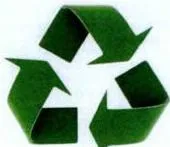
Identify the symbol shown in photograph
Appeared in: OSSSC Nursing Officer-2021
Explanation
- The image displays the universal recycling symbol, which consists of three arrows chasing each other in a triangular formation.
- This symbol signifies that a product or its packaging is made from recyclable material or is itself recyclable.
- The process it represents is often summarized as the 'Three Rs': Reduce, Reuse, and Recycle, a fundamental concept in waste management.
Why Other Options Were Wrong
- Option B: Biohazard waste is represented by a different symbol, which consists of three interlocking circles. This symbol is used to label materials that pose a threat to living organisms, primarily infectious agents.
- Option C: E-waste, or electronic waste, refers to discarded electronic devices. While it requires special disposal due to hazardous components, it is not represented by the three-arrow recycling symbol.
- Option D: Food waste is organic material that can be composted or disposed of as general waste. It does not use the recycling symbol shown.
Related Visual

Clinical Relevance
- Nursing practice connection: This is primarily an exam-oriented knowledge point with limited direct bedside application, so retain Identification of waste management symbols as background academic context rather than a clinical decision trigger.
- In a healthcare setting, proper waste segregation is critical to prevent infection and injury. Nurses must be proficient in identifying different waste types.
- According to Biomedical Waste Management Rules in India, different types of waste are segregated into color-coded bags/containers. For example, recyclable waste like plastic tubing and bottles (after disinfection) goes into a red bag, while general waste goes into a black bag.
- Knowing these symbols ensures that non-contaminated recyclable materials are not mixed with infectious biohazardous waste, which requires special, costly treatment like incineration.
How to Approach the Question
- First, carefully observe the image provided. Identify the key features of the symbol shown.
- The image shows three arrows in a continuous loop, forming a triangle.
- Recall or deduce the meaning of this common symbol. It is widely recognized as the symbol for recycling.
- Evaluate the given options. 'Recyclable waste' directly matches the meaning of the symbol.
- Eliminate the other options by recalling the symbols or definitions for biohazard waste, e-waste, and food waste.
Concept Tested & Keywords
- Concept Tested: Identification of waste management symbols
- Stem keywords: symbol, photograph, waste
- Lead-in keywords: Identify
Question ID
Q-rqU5W9EkmSR7FvMqqRHI
Reference Book
E6 Comprehensive Textbook of Community Health Nursing for BSc Nursing Students Part 2 — Subpart B (pp 276-535 of 550) p. 196-198
E6 Parks TextBook of Preventive & Social Medicine part 2 — Subpart B (pp 233-449 of 464) p. 110-112
Practise the full OSSSC Nursing Officer-2021
Attempt every question from this paper in a timed mock, then review the full solution for each one.
More Biomedical waste management Questions
- What is the best method to dispose hospital waste?
- Which among the following products are nonbiodegradable?
- The process of burning hazardous material or waste at high temperature is called?
- Which of the following combinations best meets the WHO criteria for a safe sharp's container in a high-risk infectious disease ward?
- The broken glass is classified into which of the following categories of waste according to BMW Rules 2002?
- What is the ideal way to handle contaminated sharps, including needles?
More OSSSC Nursing Officer-2021 Questions
- A man completed a journey in 10 hours. He travelled first half of the total distance at the rate of 21 km/hr and second half at the rate of 24 km/hr.…
- A person crosses a 600 metre long street in 5 minutes. What is his speed in kilometer per hour?
- What is the cube of -1 1/3?
- What is the ratio between 0.02 and 0.002?
- After 4 years the principal amount of Rs. 12000 grows into Rs. 14,400. Find out the rate of simple interest?
- What is the decimal of 9% ?
- If the marked price of an article is Rs. 400/- and its sale price is Rs. 340/-, Find out the percentage of discount.
- If three-fifth (3/5) of 60% of a number is 36, then what is the number?
- After 15 years, a man will be just four times as old as he was 15 years ago. What is his present age?