
SGPGI Nursing Officer-2023
Medical & Surgical Nursing
Medium
Identify the disease sign which denotes in the following image? 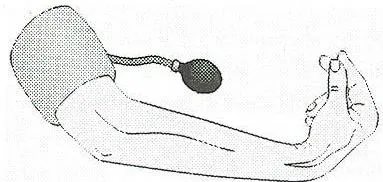
Appeared in: SGPGI Nursing Officer-2023
Explanation
- The image clearly depicts carpal spasm (flexion of the wrist and adduction of the thumb) induced by the inflation of a blood pressure cuff.
- This specific clinical finding is the definition of a positive Trousseau's sign.
- Trousseau's sign is a classic indicator of latent tetany caused by hypocalcemia (a serum calcium level below 8.6 mg/dL).
- The ischemia from the cuff increases the excitability of the ulnar nerve, triggering the spasm in susceptible individuals.
Why Other Options Were Wrong
- Option B: Chvostek's sign involves the facial muscles, not the hand. It is elicited by tapping the facial nerve, not by using a blood pressure cuff.
- Option C: Rose sign, also known as rose spots, refers to a faint pink or salmon-colored skin rash, typically seen on the trunk in diseases like typhoid fever. It is not a neuromuscular sign.
- Option D: There is no universally recognized 'DVT sign.' The most commonly associated (though unreliable) sign for Deep Vein Thrombosis (DVT) is Homans' sign, which involves calf pain upon dorsiflexion of the foot. This is completely unrelated to the hand spasm shown.
Related Visual

Clinical Relevance
- Nursing practice connection: Use the key finding related to Identification of clinical signs associated with electrolyte imbalances, specifically hypocalcemia to guide bedside assessment, documentation, and the next nursing action.
- Recognizing Trousseau's sign is a critical nursing skill for the early detection of hypocalcemia, which can lead to life-threatening complications like laryngospasm and seizures if untreated.
- Nurses should be particularly vigilant for this sign in at-risk patients, such as those who have had thyroid or parathyroid surgery, patients with pancreatitis, or those with chronic kidney disease.
- If a positive Trousseau's sign is observed, the nurse's priority is to ensure patient safety (e.g., seizure precautions), notify the provider immediately, and prepare for the potential administration of IV calcium gluconate.
How to Approach the Question
- First, carefully analyze the image to identify the key components and actions. Observe the presence of a blood pressure cuff on the upper arm and the specific posture of the hand (flexed wrist, adducted thumb).
- Recognize this specific hand posture as carpal spasm.
- Connect the stimulus (inflated BP cuff) with the response (carpal spasm).
- Review the definitions of the clinical signs provided in the options.
- Match your observation from the image to the correct definition. Trousseau's sign is defined as carpal spasm induced by ischemia from a BP cuff.
- Eliminate the other options by recalling their definitions: Chvostek's sign (facial twitch), Rose sign (skin rash), and DVT signs (leg-related).
Concept Tested & Keywords
- Concept Tested: Identification of clinical signs associated with electrolyte imbalances, specifically hypocalcemia.
- Stem keywords: disease sign, image
- Lead-in keywords: Identify
- Clinical cues: The image shows a blood pressure cuff and a resulting hand spasm, which is a key diagnostic clue.
Question ID
QFLD3Sue3QTcjXCmT_jo7h
Reference Book
E6 Nursing Brunner Adult Health 3SA Vol 1 Part 4 p. 30-32
E6 Nursing Brunner Adult Health 3SA Vol 1 Part 1 p. 154-156
E6 Pathology- ROBBINS & COTRAN PATHOLOGIC BASIS OF DISEASE 10TH Ed p. 1096-1098
Practise the full SGPGI Nursing Officer-2023
Attempt every question from this paper in a timed mock, then review the full solution for each one.
More Fluid and Electrolytes: Balance and Distribution Questions
- All are crystalloid solution; except:
- ECG of the patient is showing ST depression, Prominent U wave and inverted T wave. Which of the electrolyte imbalance present?
- A patient reports calcium loss. What is the nursing intervention?
- The principle of hemodialysis in which the water is moving under high pressure to an area of lower pressure is:
- Measurement of arterial blood gas shows pH: 7.2, PaCO2 : 70 mm Hg, HCO3: 27 mmol/L and PaO2: 59 mm Hg. Interpret this:
- Fluid volume deficit or hypovolemia describes the loss of
- 100 mL fluid is given to patient and patient's CVP is 3 mm Hg, then what is the next intervention?
- A patient presents to the emergency department with a serum pH of 7.25, pCO2 of 40 mmHg, HCO3 of 22 mEq/L, sodium of 150 mEq/L, and chloride of 100 m…
- A 65-year-old patient is admitted to the hospital with a serum sodium level of 132 mmol/L. Despite being asymptomatic at admission, the patient begin…
- How would you most accurately assess fluid volume status in a patient with 20% total body surface area (TBSA) burns?
More SGPGI Nursing Officer-2023 Questions
- A plane can cover 6000 km in 8 hours. If the speed is increased by 250 kmph, then the time taken by the plane to cover 9000 km is?
- If medicine costs 64 after 20% discount is allowed, what was its original price?
- A 5-year-old child, his weight is 18 kg. Which size of Foleys catheter would be appropriate for this child?
- All visitors traveling from India to Kenya, Uganda, Rwanda, Nigeria, Mali, Ghana, and Ethiopia are required to be vaccinated against which vaccine wi…
- Total doses required of COVIDSHIELD vaccine in health care worker?
- Renal stone, polyuria, weakness, hypercalcemia is a result of
- One patient comes to the clinic with redness, pain, and tenderness in the breast. What would be the possible cause of the breast abscess?
- Most common STD in men?
- A child admitted with an eye infection. The ophthalmologist prescribed antibiotic eye drops. Where should the eye drops be administered?
- What is the best way to prevent the spread of infection in the ICU?