
BHU NO-2019
Mental Health Nursing
Easy
A young lady presents with repeated episodes of exercise & eating followed by purging by use of laxatives. Which is the diagnosis?
Appeared in: BHU NO-2019
Explanation
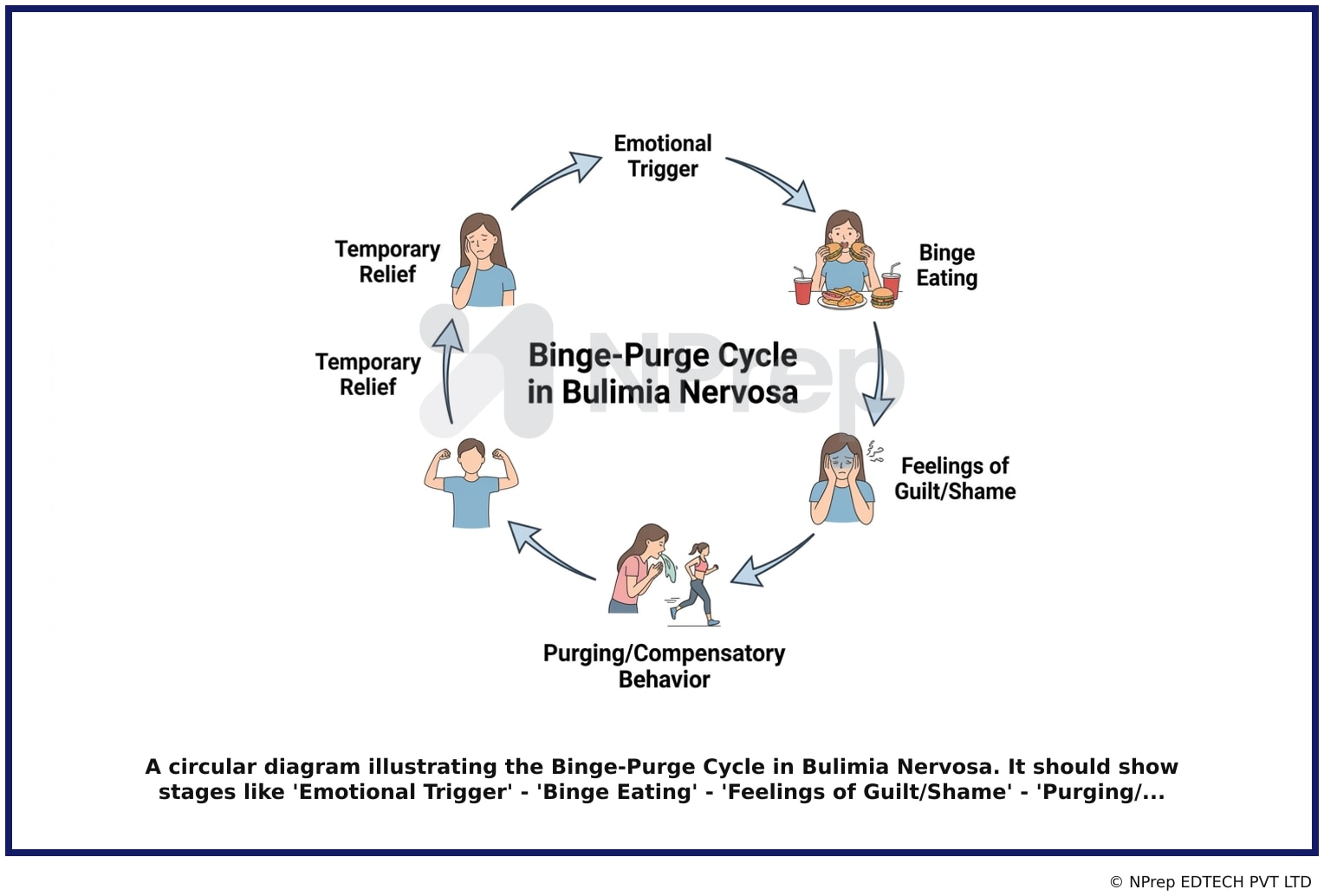
- The correct diagnosis is Bulimia Nervosa, characterized by recurrent episodes of binge eating.
- This is followed by inappropriate compensatory behaviors to prevent weight gain, such as self-induced vomiting, misuse of laxatives, diuretics, or excessive exercise.
- The patient's symptoms of repeated eating episodes followed by purging with laxatives and exercise directly match the diagnostic criteria for Bulimia Nervosa.
- Unlike Anorexia Nervosa, individuals with Bulimia Nervosa are typically of normal or slightly above normal weight.
Why Other Options Were Wrong
- Option A: Schizophrenia is a thought disorder characterized by psychosis (hallucinations, delusions) and disorganized thinking. While eating habits can be bizarre, it does not involve the specific binge-purge cycle driven by a fear of weight gain.
- Option C: Hyperphagia refers only to excessive eating. The key feature missing is the compensatory (purging) behavior. The patient in the scenario is not just eating excessively; they are actively trying to undo the effects.
- Option D: Mania is a mood disorder characterized by elevated energy, euphoria, and impulsivity, typically seen in bipolar disorder. It is not an eating disorder and does not fit the specific pattern of bingeing and purging.
Related Visual
Clinical Relevance
- Nursing practice connection: Use the key finding related to Diagnosis of eating disorders based on clinical presentation to guide bedside assessment, documentation, and the next nursing action.
- Nurses play a vital role in managing Bulimia Nervosa by creating a safe, non-judgmental environment, monitoring for life-threatening complications like electrolyte imbalances (especially hypokalemia from purging), and implementing structured meal plans.
- A key nursing responsibility is observing patients during and after meals to prevent purging behaviors, which is essential in an inpatient setting to break the cycle.
- What if the patient was also severely underweight (e.g., BMI below 18.5)? The diagnosis would likely change to Anorexia Nervosa, Binge-Eating/Purging Type. The distinction is critical because the medical risks and treatment priorities differ, with weight restoration being the immediate goal in anorexia.
How to Approach the Question
- First, analyze the patient's presenting behaviors described in the stem: 'repeated episodes of exercise & eating' (suggests bingeing) and 'purging by use of laxatives' (compensatory behavior).
- Recognize this pattern of bingeing followed by compensatory action as the core feature of a specific type of eating disorder.
- Evaluate each option against this core feature.
- Eliminate 'Schizophrenia' and 'Mania' as they are primarily thought and mood disorders, respectively, not eating disorders defined by this cycle.
- Differentiate between 'Bulimia nervosa' and 'Hyperphagia'. Hyperphagia is just excessive eating, while Bulimia includes the crucial second step of purging.
- Conclude that 'Bulimia nervosa' is the only diagnosis that encompasses all the described symptoms.
Concept Tested & Keywords
- Concept Tested: Diagnosis of eating disorders based on clinical presentation.
- Stem keywords: repeated episodes, exercise, eating, purging, laxatives
- Lead-in keywords: diagnosis
- Clinical cues: The combination of excessive eating, purging, and laxative use is a classic triad for Bulimia Nervosa.
Question ID
Q8M-7Qd7oOFLHGy4q11Yi7
Reference Book
E6 Kaplan Sadock's Synopsis of Psychiatry-2022 (pp 1-3768 of 3768) pp. 1503-1505, 1511-1513, 1505-1507
Practise the full BHU NO-2019
Attempt every question from this paper in a timed mock, then review the full solution for each one.
More Eating Disorders Questions
- Patient with Anorexia nervosa taking food correctly as per her diet plan, but there was no increase in weight observed. What will be the nursing inte…
- A patient with anorexia nervosa will have:
- A 19-year-old female is admitted to the emergency department after being found unconscious. Her blood pressure is 82/50 mm Hg. She is 5'4" tall and w…
- All of the following are signs of anorexia nervosa, except?
- A patient is taking a proper diet as prescribed for bulimia nervosa, but the patient's weight is not gaining. Which nursing action is appropriate?
- The drug of choice to treat Bulimia nervosa is:
- Bulimia Nervosa and Anorexia Nervosa are?
- Psychological eating disorder in which there is an intense fear of becoming obese?
- All of the features are seen in anorexia nervosa, except?
- A 16-years old girl is suffering from anorexia nervosa. Which one is a best nursing intervention for her?
More BHU NO-2019 Questions
- For tracheal intubation of a child of 6 years uncuffed tracheal tube of following size would be appropriate:
- Hemophilia A is characterized by the deficiency of:
- Which of the following is normal position of uterus:
- A 34 years old female has 3 months history of disturbed sleep with early morning awakening, decreased appetite, lethargy, multiple body pains, feelin…
- Lactose is composed of following two sugars:
- A 25 years female presents with repeated vomiting and several episodes of low grade fever. On examination, she was icteric and had right upper quadra…
- When a nurse is performing a surgical hand hygiene, she must keep hands:
- Concentration of oxygen in expired air is about?
- The appendix is located in?
- How much distance should be maintained from bililight to neonate?